
The Brief
A large open-plan kitchen and dining space in Orpington, around 64 square metres. The existing floor was a glossy white marble-effect tile that no longer suited the dark, contemporary kitchen the client had fitted. They wanted to swap it for a warm wood-effect porcelain laid in a parquet pattern, running unbroken across the whole open-plan space. The floor had underfloor heating throughout, and the subfloor was a mix: a newer rigid section and an older part of the house that moves slightly.
The Challenge
Three things made this more involved than a straight re-tile. First, the old tiles had to come up cleanly without damaging the underfloor heating sitting just below the surface. Second, the mixed subfloor is a real risk: where a rigid section meets an older one that flexes, any tile bridging the join will crack over time unless the floor is properly isolated. Third, a parquet layout in wood-effect porcelain is one of the most setting-out intensive jobs there is. Every block has to sit perfectly square, the pattern has to stay centred and balanced across the full 64 square metres, and any drift at the start is multiplied by the time you reach the far wall. Wood-effect porcelain also has a directional grain, so each piece has to be turned the right way for the pattern to read correctly.
Before & After


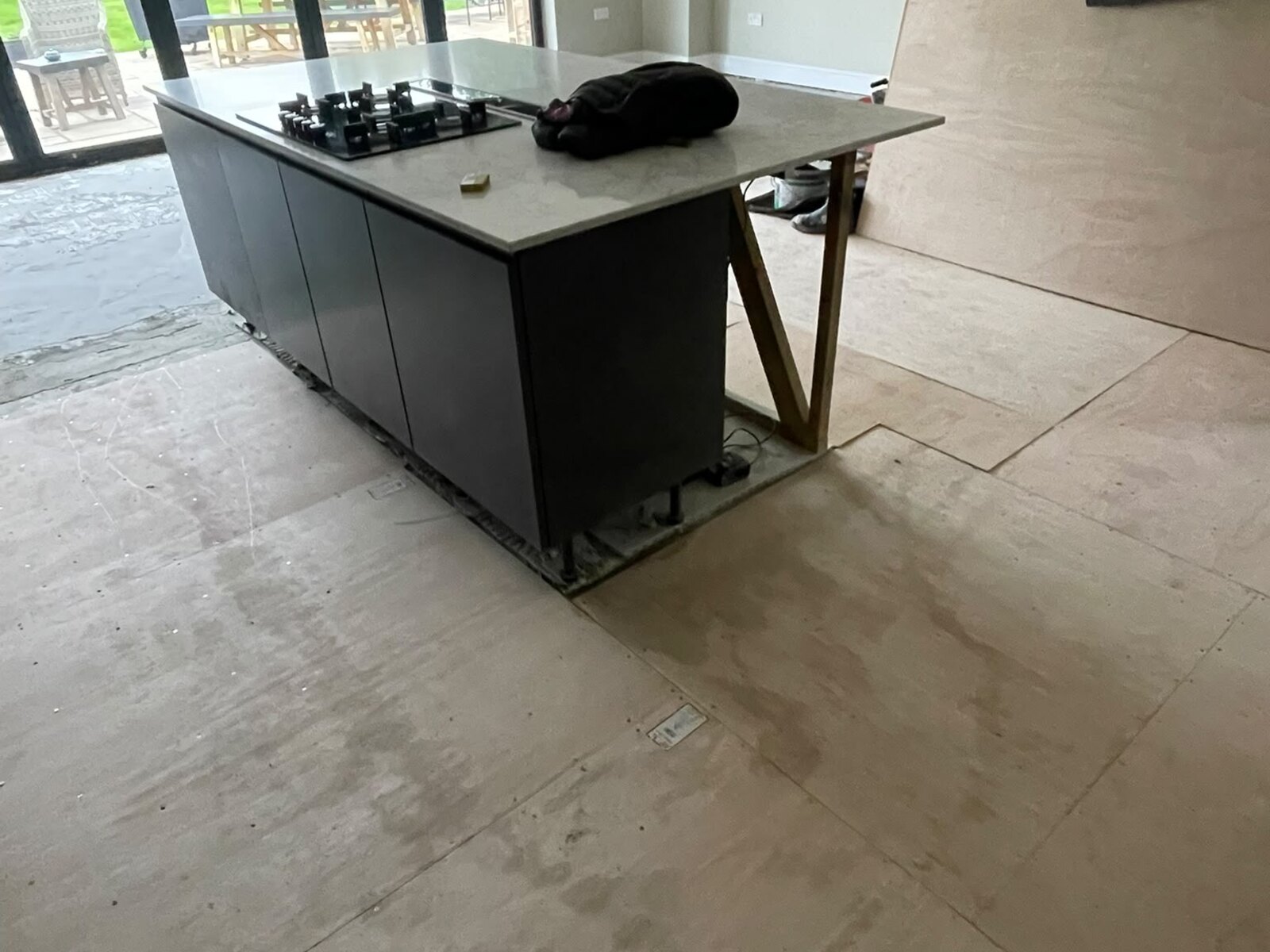 Before: the dated glossy white marble-effect floor
 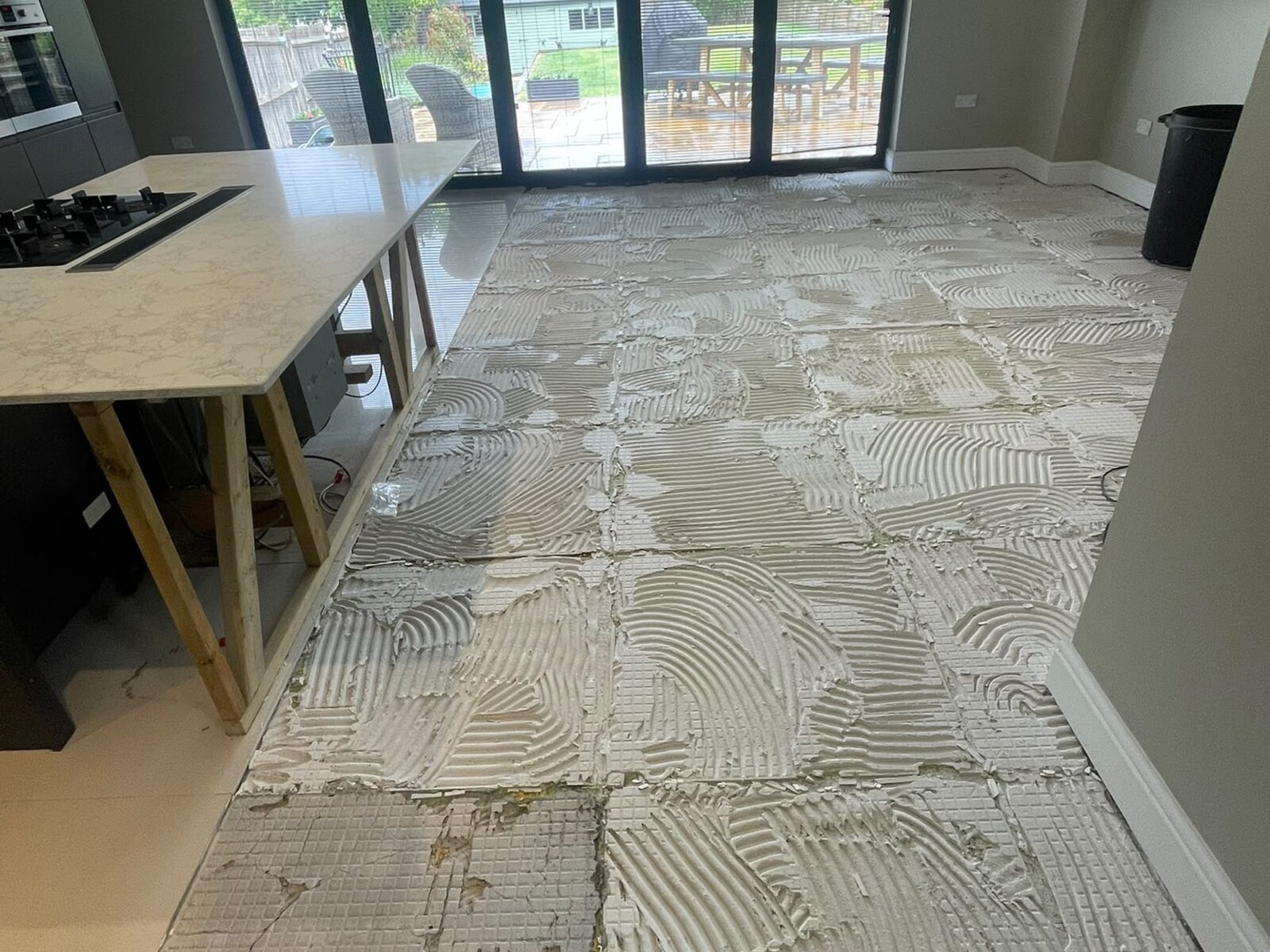 Old floor up, fresh adhesive combed and ready
 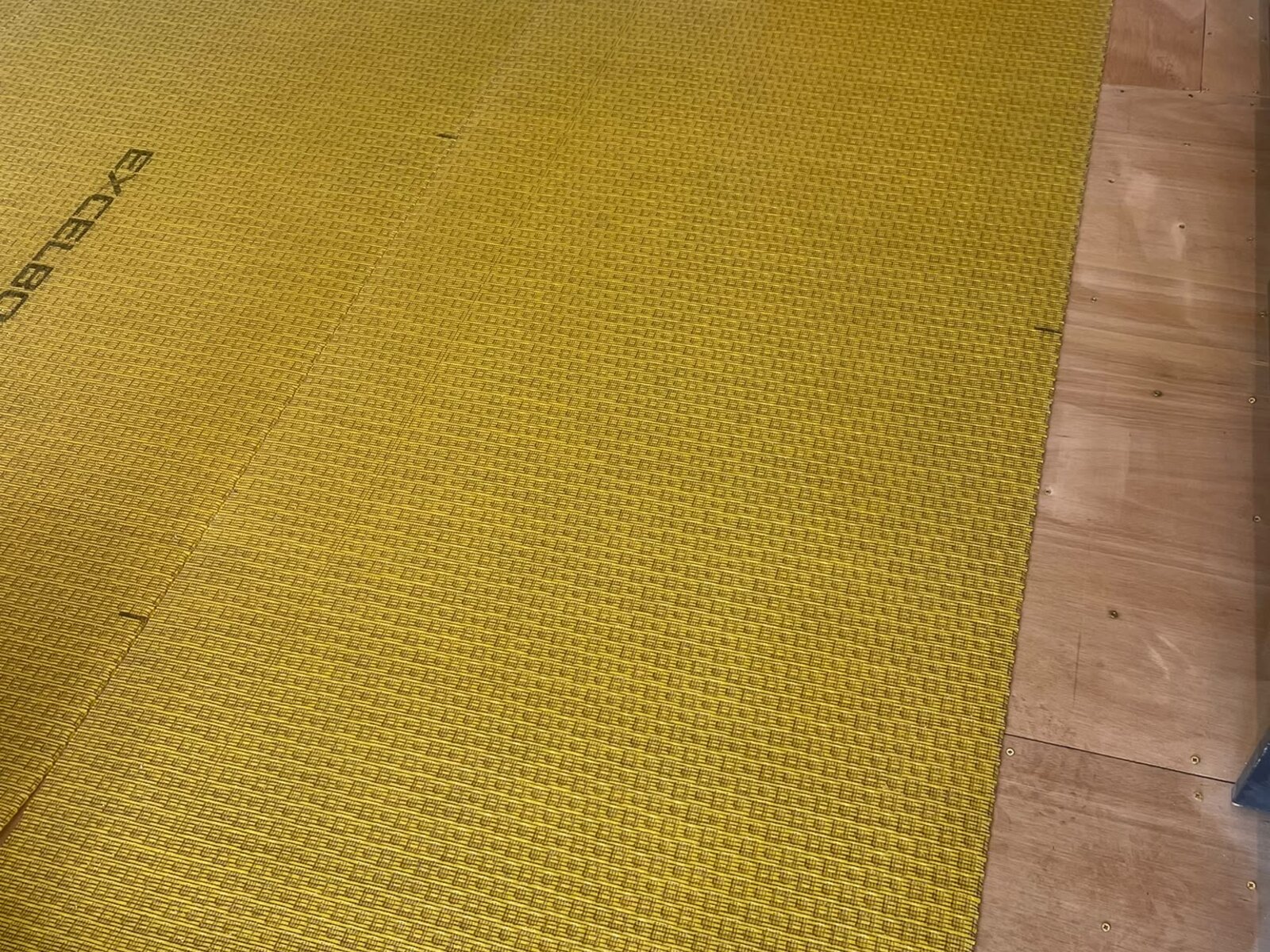 Uncoupling membrane over the underfloor heating to isolate subfloor movement
 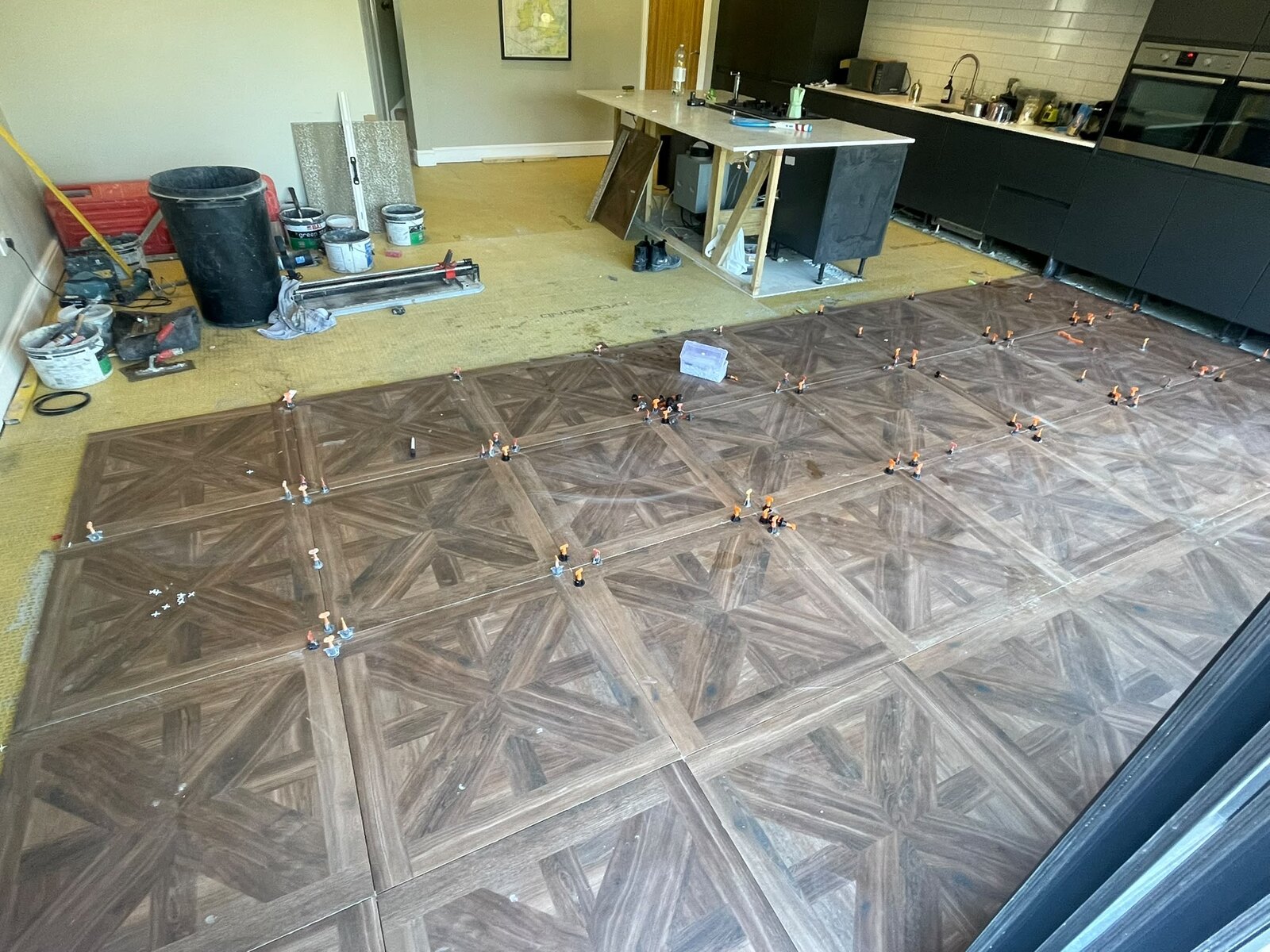 Levelling clips keeping every block flush, no lippage
 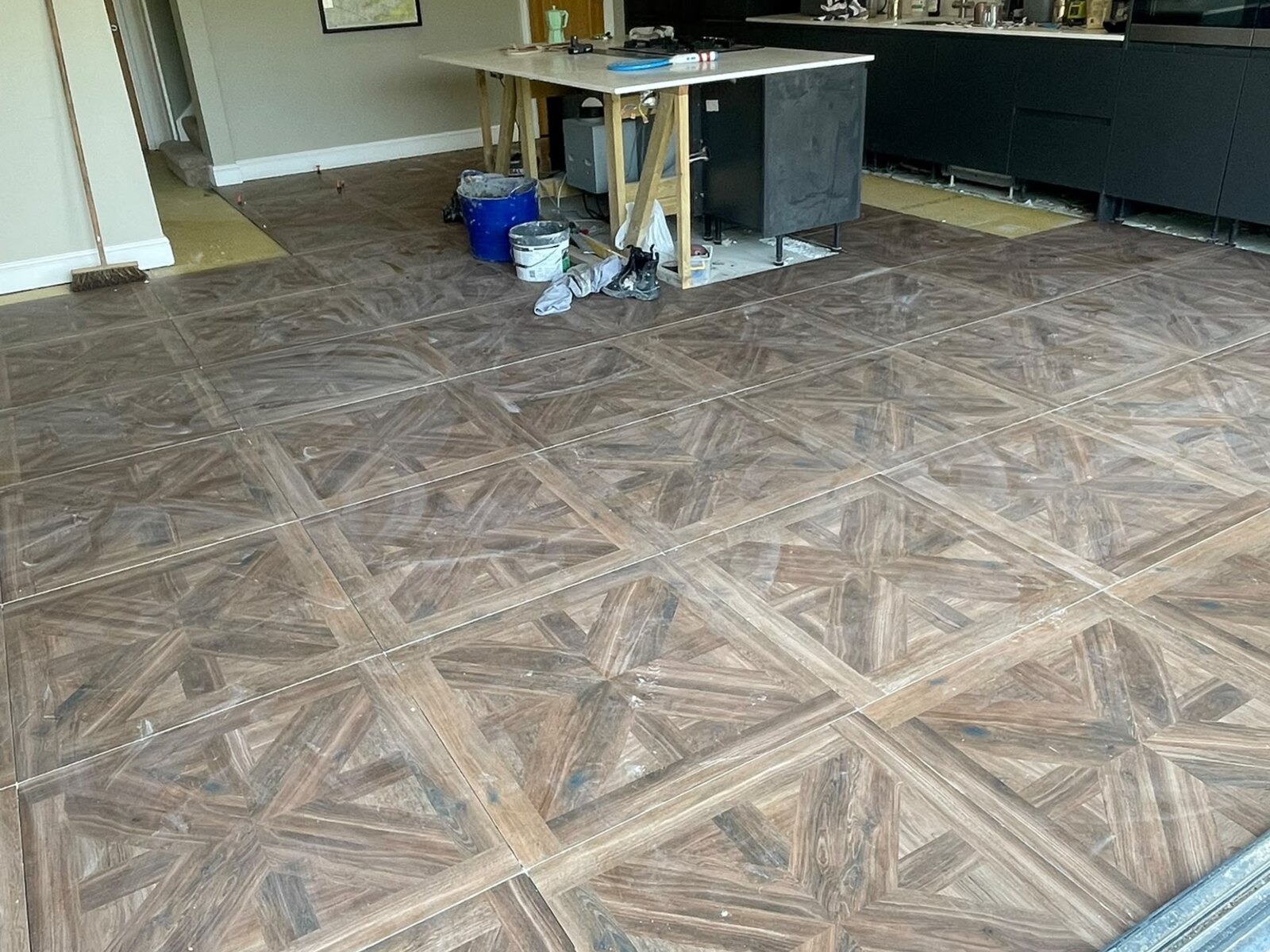 The parquet pattern, set out square and centred
 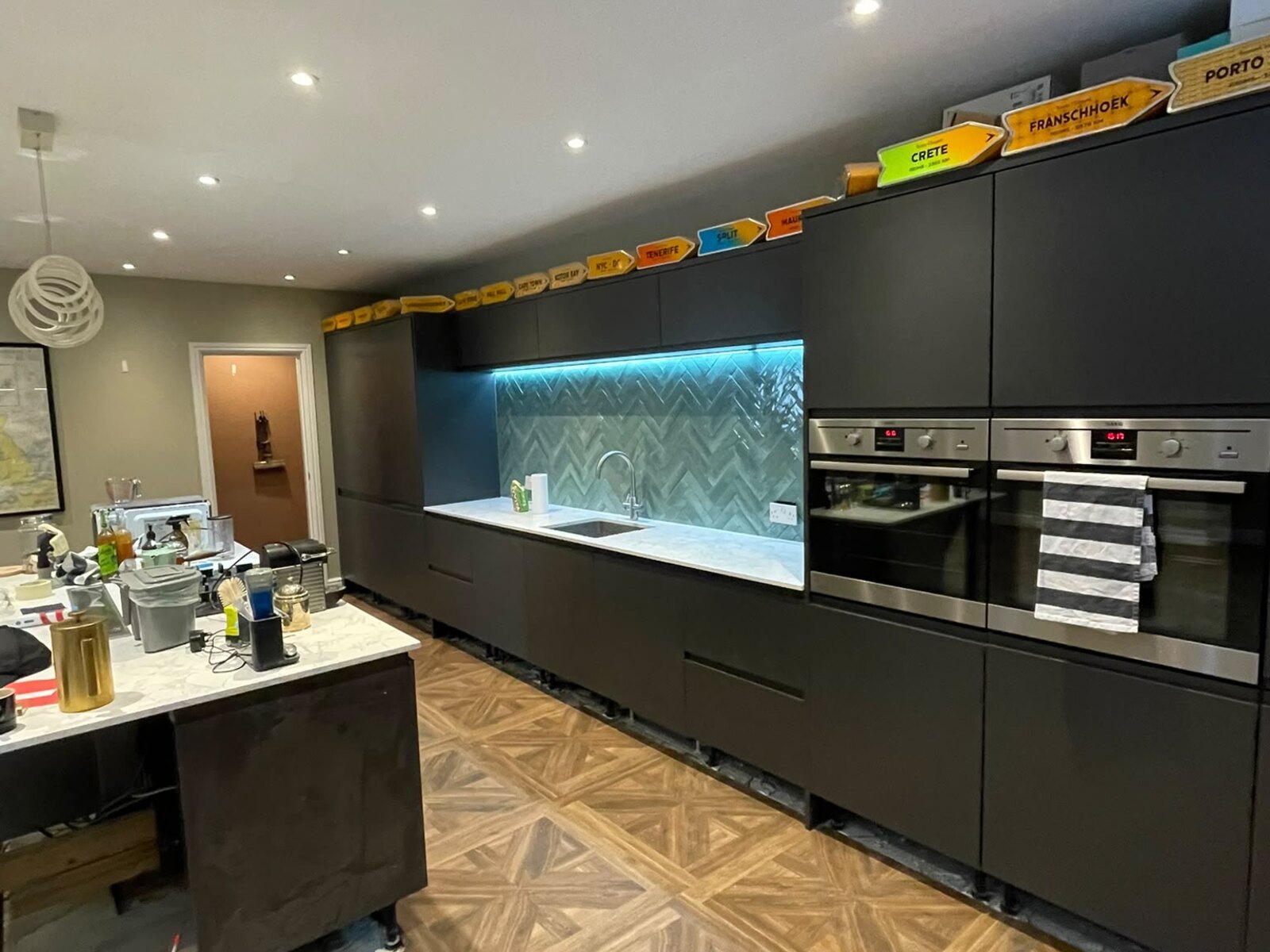 The finished floor running through the kitchen
 The Solution
I lifted the old floor carefully and prepared the whole area. An uncoupling membrane went down across the entire floor. It isolates the new tiles from movement in the mixed subfloor and lets the underfloor heating warm the surface efficiently. The adhesive was a flexible product rated for underfloor heating, so it copes with the constant warming and cooling without going brittle. I set the parquet pattern out from the centre lines of the room and dry-laid the first panels to confirm the layout before any adhesive went down. Levelling clips were used throughout so every block finished flush, with no lippage underfoot. Expansion joints were placed at the perimeter and at the subfloor transition to absorb movement.
The Result
The floor transforms the room. The cold white marble-effect tiles are gone, replaced with a warm wood-effect parquet that runs flat and unbroken through the whole open-plan kitchen and dining area. The pattern is square and centred from wall to wall, every block is flush, and the floor sits happily over the underfloor heating. It is the kind of before and after that changes how a whole space feels, and exactly the sort of job I most enjoy getting right.
Related Guides
- Wood-Effect Parquet Kitchen Floor: Swapping Tired White Tiles for a Warm Finish in Orpington Practical Advice · 5 min read
- Tiling a Conservatory or Extension: Substrate Transitions, DPM, and What to Get Right Technical · 5 min read
- Open Plan Kitchen Floor Tiling: Continuous Floors, Mixed Substrates, and Getting It Right Technical · 6 min read
Planning Something Similar?
Every project starts with a conversation. Get in touch and I will visit your property, assess the job, and give you a clear quote.