
The Brief
A full bathroom in a Bromley home, tiled throughout in a large-format grey marble-effect porcelain. The tile runs across the floor, up the walls, around a corner shower enclosure with a recessed niche, and down the panel of the bath, where a white quartz top caps the surround. The room also takes a wall-hung WC on a concealed cistern, a shaker-style double vanity, and traditional chrome brassware. The plumbing was carried out by Airth Plumbing and Heating, who I work alongside regularly. The tiling was mine.
The Challenge
Large-format tile is unforgiving in a way smaller tile is not. The bigger the piece, the more any dip or bump in the wall telegraphs through as lippage, where one tile edge sits proud of its neighbour and catches the light down the whole run. A wall that would happily take a small metro tile will show every imperfection under a slab this size. The pattern is the second problem: a marble-effect tile only convinces if the veining flows. Lay the pieces without planning the run and the eye reads it instantly as repeated printing rather than stone. This room compounded both. The tile had to turn into the shower, carry around a recessed niche, run behind a wall-hung WC and its cistern frame, and then continue down the bath panel and finish against the quartz. Every one of those junctions is a place where the level or the pattern can break, and all of them are at eye height.
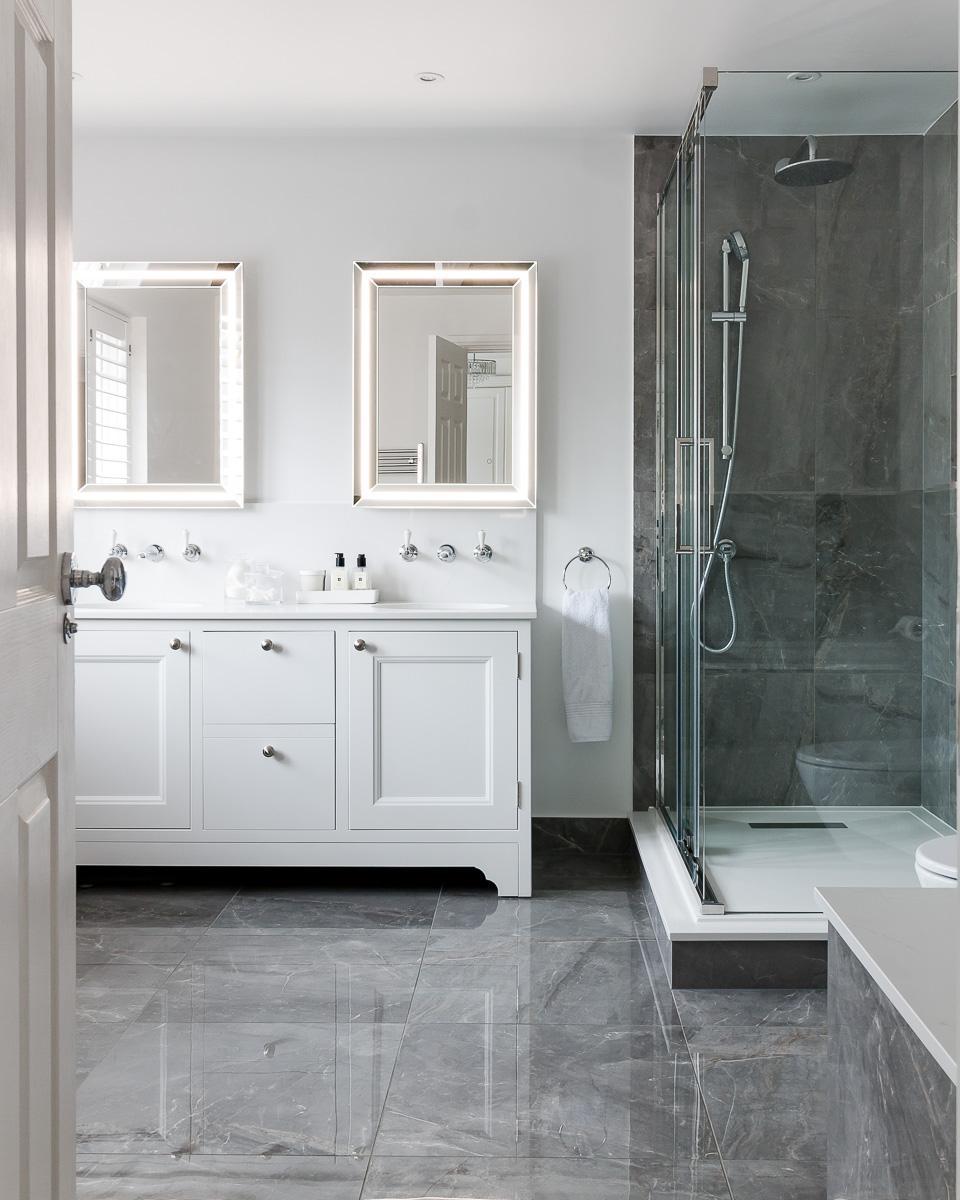 The corner shower tiled to full height, veining carried around the return wall
 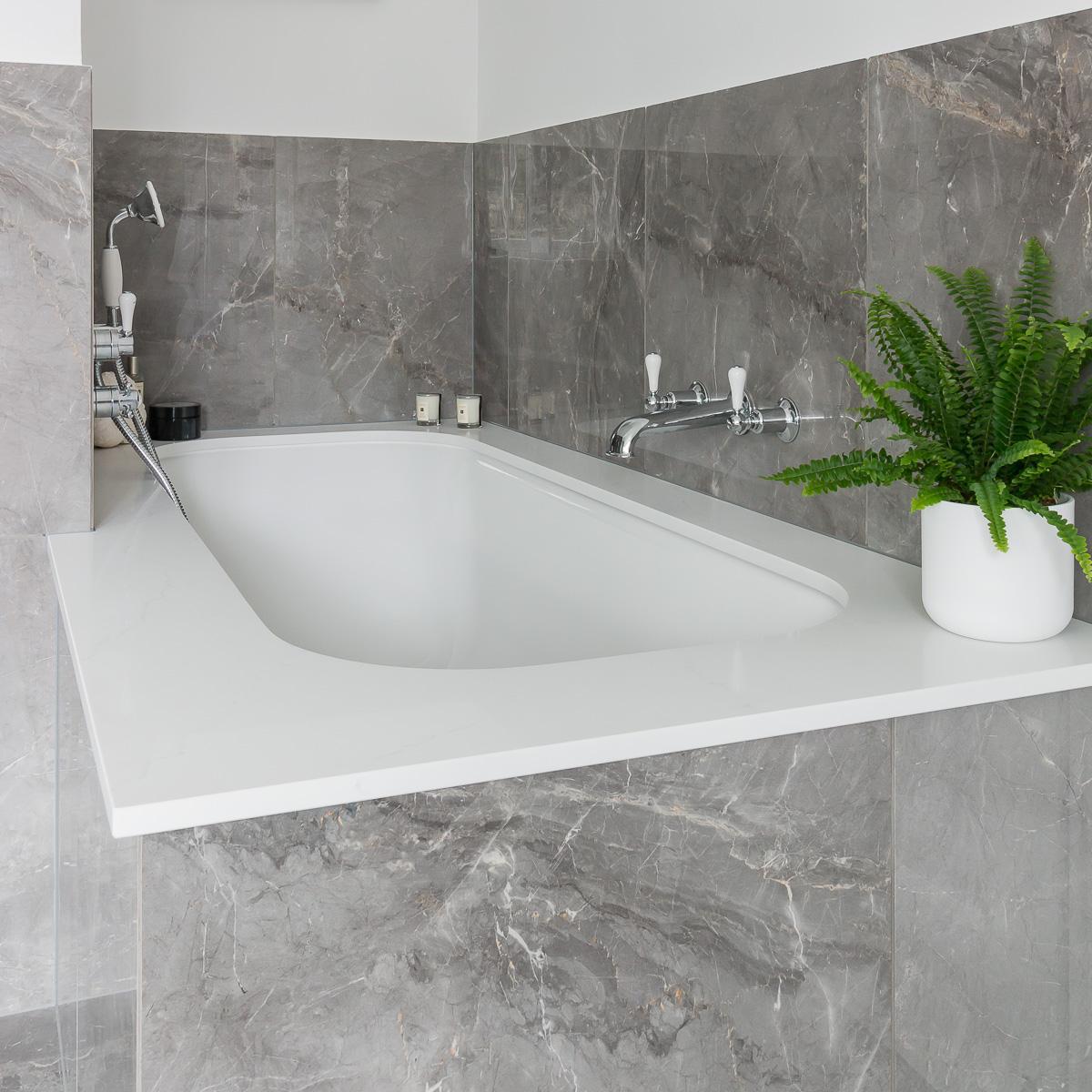 The tile carried down the bath panel and died cleanly into the quartz top
 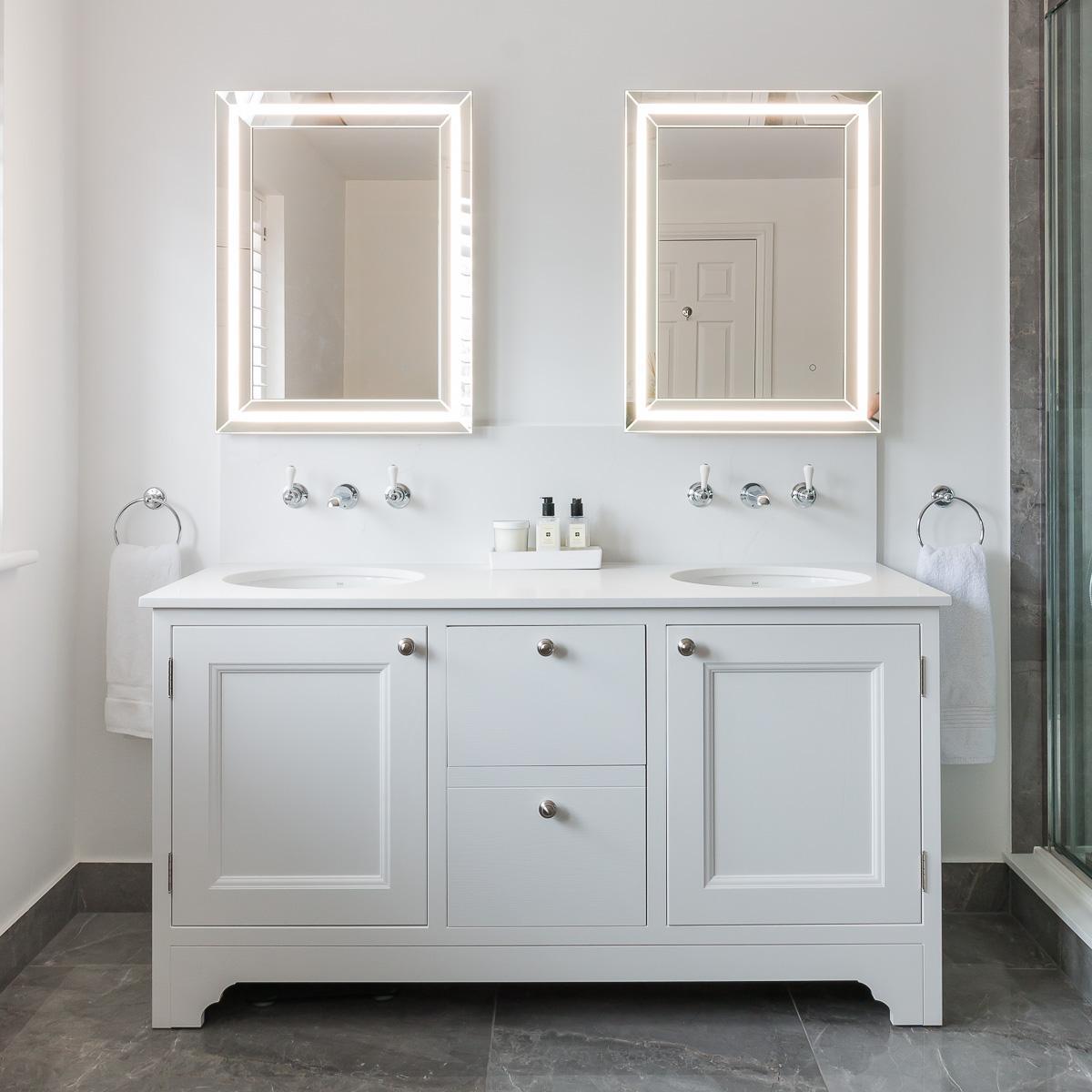 Balanced cuts behind the vanity, courses lining through from wall to floor
 The Solution
I checked and prepared the substrate first, because at this tile size flatness is not optional. The shower area was tanked before anything went on the wall. Every tile was back-buttered as well as combed onto the wall to get near-full adhesive coverage, since with large format a void behind the tile is a hollow spot that cracks later. Levelling clips were used throughout so each piece finished flush with its neighbours. Before fixing, I planned the vein direction across the whole room and dry-laid the pieces to check the flow, so the pattern carries across each wall and through the niche instead of stopping dead at the opening. Setting out was worked from the faces you actually see, the wall facing the door and the shower, so the cuts fall in the least conspicuous corners and the courses line through from wall to bath panel. Airth had the plumbing first-fixed before I started, so I could tile around the concealed cistern and the valve without anything being chased back out afterwards.
The Result
The finished room reads as continuous stone rather than a grid of tiles. The veining flows across the walls and carries through the shower niche. There is no lippage: run a hand across the wall and it is flat. The courses line through from the wall onto the bath panel, and the tile meets the quartz top cleanly. The chrome brassware and the white vanity sit against the grey without fighting it. It is a restrained room that depends entirely on the flatness and the setting out being right, which is exactly what large-format punishes you for rushing.
Related Guides
Planning Something Similar?
Every project starts with a conversation. Get in touch and I will visit your property, assess the job, and give you a clear quote.