Zellige Tiles: Everything You Need to Know Before You Buy
Zellige tiles are the defining tile trend of the last few years. This guide covers what zellige actually is, where it works, where it does not, and what a tiler needs to do differently when laying it.
Zellige tiles have been the most talked-about tile of the past few years and they continue to dominate in 2026. The amber, caramel, and warm sage colourways have taken over from last year’s burgundy, but the interest in zellige as a material is as strong as it has been.
Here is what it is, where it works, and what you actually need to know before committing to it.
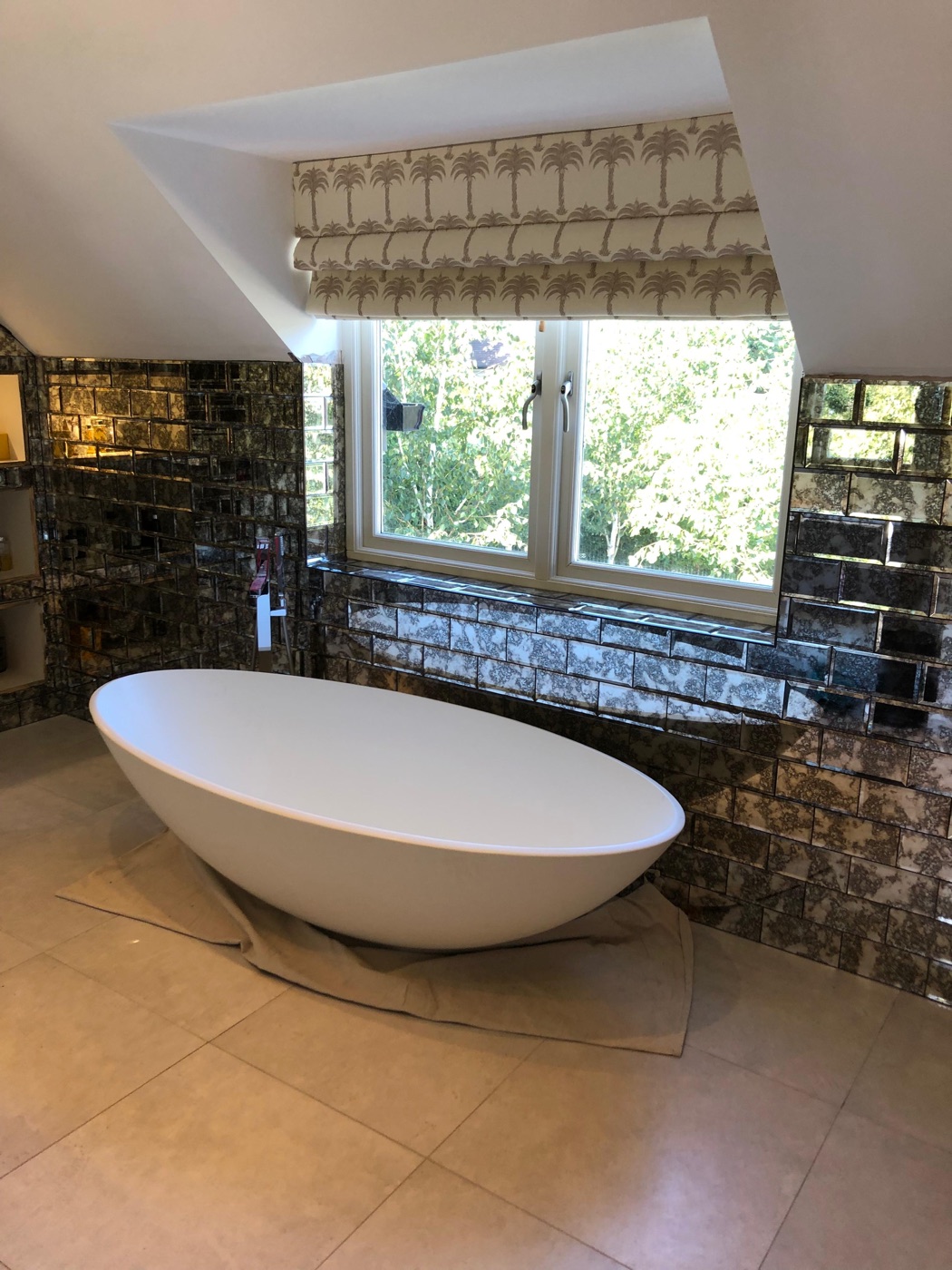 Luxury bathroom in Bromley — warm-toned reflective tiles alongside a freestanding bath. Zellige works in settings exactly like this: characterful, warm, and built around a hero bath or feature. View bathroom tiling service
Looking for zellige inspiration? Bert and May, Ca’ Pietra, and Mandarin Stone all carry wide zellige ranges with photos to browse.
What zellige actually is
Zellige is a handmade Moroccan clay tile. It is cut by hand from a larger clay slab, fired in a traditional kiln, and glazed. The process produces tiles that are deliberately irregular: the surface is slightly uneven, the glaze varies in depth and tone across each tile, and no two pieces are identical.
That irregularity is the point. Under light, zellige behaves differently from any factory tile. The variation in glaze reflects light at slightly different angles across the surface. In morning light the tile looks one way; in the afternoon it looks different. The room shifts throughout the day.
The most commonly used suppliers in the UK include Bert and May, Ca’ Pietra, and Mandarin Stone, all of which stock a wide range of zellige in various colourways and sizes.
Where zellige works
Kitchen splashbacks. This is the strongest application for zellige. Behind a hob or along the back of a kitchen worktop, zellige in a warm amber or sage reads beautifully and the irregular glaze surface adds life to what is often the most prominent surface in the room. It suits both period kitchens and contemporary ones.
Bathroom walls. Particularly feature walls in a shower or behind a freestanding bath. The handmade quality suits bathrooms that are meant to feel considered and characterful rather than fitted. It works well against warm stone floors and with brushed brass or unlacquered brass fixtures.
Utility areas and garden rooms. Zellige is increasingly used in garden rooms, utility rooms, and outdoor kitchen areas. The handmade earthy quality suits those spaces well.
Where I would think carefully: Zellige on a bathroom floor is possible but needs consideration. It is softer than porcelain and will show wear in a high-traffic bathroom over time. In a low-traffic guest bathroom, it can work. In the main family bathroom, I would usually steer towards a more robust floor tile and use zellige on the walls.
The installation differences
Zellige is not installed the same way as a standard ceramic or porcelain tile. If a tiler treats it like a standard tile, problems follow.
Variable thickness. Zellige tiles vary in thickness from piece to piece and even across a single tile. This means bed adjustment is required for each tile. The adhesive bed needs to be manipulated under each piece to bring the face level. This takes significantly longer than tiling with factory-precise tiles where the thickness is uniform.
Back-buttering is essential. Because of the variable thickness and the need for full adhesive coverage, I back-butter each zellige tile in addition to applying adhesive to the substrate. This ensures no voids behind the tile.
Grout width is not uniform. The irregular tile dimensions mean grout lines vary. Some tilers try to force zellige into uniform grout lines, which fights the nature of the material. I work with the variation, keeping lines consistent in direction but accepting that width will vary slightly. This is how zellige is meant to look.
The adhesive choice. White adhesive is not suitable for most zellige. The clay body can absorb moisture from the adhesive and carry it to the surface, leaving a bloom on the glaze. I use a grey adhesive rated for porous materials with appropriate flexibility.
Seal before grouting. Like other porous tiles, zellige needs a face seal before grouting to stop grout haze absorbing into the glaze. Grout haze on zellige is extremely difficult to remove without damaging the surface.
Grout choice for zellige
This matters more than most people realise. Zellige is a decorative tile. The grout is part of the picture.
Wide, dark grout emphasises the handmade quality and the variation between tiles. It looks traditional and deliberate, and suits the Moroccan origin of the material.
A narrower, tile-toned grout makes the surface read more continuously, which is better for a contemporary kitchen splashback where you want the colour to read clearly.
I would steer away from white grout on coloured zellige. It is too stark a contrast and it dates quickly.
Cost compared to standard tile
Zellige tiles are more expensive than ceramic or porcelain. Prices vary by supplier and colourway, but budget significantly more per square metre than you would for a standard wall tile.
Installation also costs more. The bed adjustment per tile and the additional care required add to the labour time. On a kitchen splashback of typical size, expect the installation to take noticeably longer than the equivalent area in standard tile.
For a realistic quote on a zellige installation in Bromley, Beckenham, Orpington or surrounding areas, get in touch and I will visit and give you a clear written price.
FAQ
What are zellige tiles made of? Zellige are handmade Moroccan clay tiles, cut by hand and individually glazed. The handmade process produces natural variation in surface texture and glaze depth across each tile.
Are zellige tiles suitable for bathrooms? For bathroom walls, yes. For bathroom floors in low-traffic settings, possibly. For high-traffic bathroom floors, I would suggest a more robust tile. Zellige is softer than porcelain and will show wear over time under heavy use.
Why is zellige more expensive to install? Each tile varies in thickness and requires individual bed adjustment during laying, which takes significantly more time than standard tile installation. Back-buttering, sealing, and grout selection also add to the process.
What colours are zellige tiles in 2026? Amber, caramel, warm sage, tobacco, and dusty green are the dominant directions for 2026. Burgundy and deep wine, which led last year, are less prominent. Warm neutrals and earthy tones run throughout.
Can I use zellige as a kitchen splashback? Yes. It is one of the best applications for zellige. Behind a hob or along a kitchen worktop in an amber or sage colourway it looks exceptional and is practical in that location.
Related reading: Bathroom tile trends 2026 · Marble in the bathroom: what to know · Bathroom tiling service across Bromley and South East London · Marble and natural stone tiling
Got a specific question? Call me on 07990 521717 , see the marble and natural stone service, or use the contact form — I'm happy to give advice with no obligation.