Types of Tiles Explained: Porcelain, Ceramic, Natural Stone, Zellige and More
A plain-English guide to every type of tile used in domestic homes — what each material is, where it works, where it does not, and what a tiler needs to do differently for each one.
If you are planning a tiling project, the range of materials available can be confusing. Porcelain, ceramic, marble, limestone, travertine, zellige, encaustic, terrazzo: they all look different, perform differently, need different adhesives, and fail in different ways if installed incorrectly.
This guide explains each tile type clearly: what it is, where it is best used, and what a tiler needs to know when working with it.
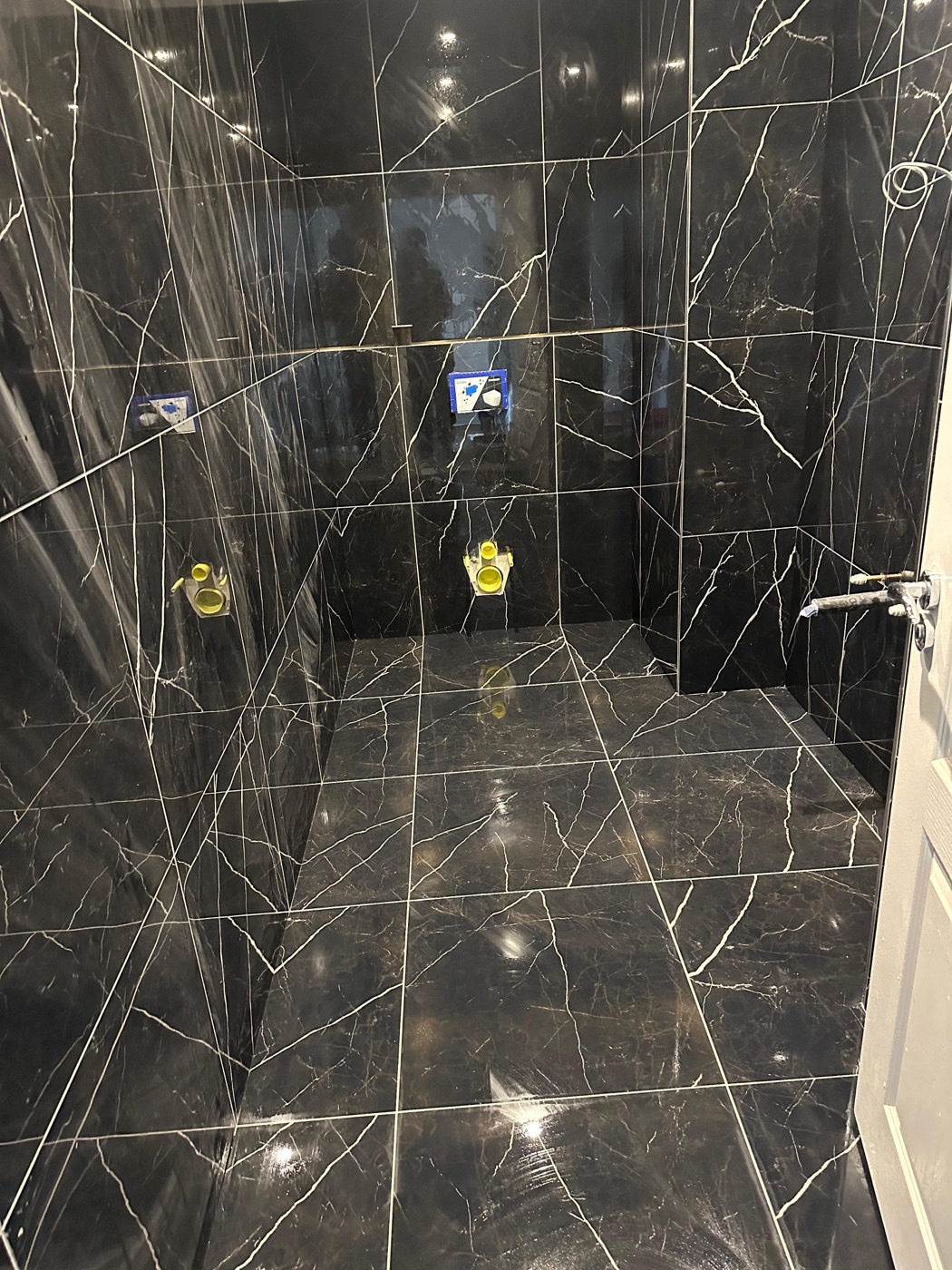 Nero Marquina black marble wet room, Bromley — natural stone at its most dramatic. This is one of the most demanding tile types to install correctly: specific adhesive, pre-sealing, movement joints, and full waterproofing behind. Marble and natural stone service
Porcelain tile
Porcelain is a type of ceramic tile made from a denser clay mixture and fired at higher temperatures. The result is a tile that is harder, less porous, and more durable than standard ceramic.
Porosity: Very low. Moisture does not penetrate the tile surface, which makes porcelain excellent for wet environments.
Hardness: High. Porcelain is resistant to chips, scratches, and wear. It suits floors in high-traffic areas.
Formats available: Almost unlimited. Large format (up to 1200x1200 and beyond), standard wall formats, mosaic, brick format. Porcelain is the most versatile material.
Surface finishes: Matte (the dominant choice in 2026), polished (looks like marble, shows marks easily), satin/semi-matte, textured, structured (3D surface).
What it needs: Correct flexible adhesive rated for the format. Large format tiles (over 600mm) need a full-bed application with no voids. Flat substrate.
Where it works: Everywhere. Bathroom floors, shower walls, kitchen floors, hallways, wet rooms, outdoor applications (check frost-rating for external use).
Ceramic tile
Ceramic is the original tile material: clay-based, kiln-fired, usually glazed on the surface. The glaze is where the colour and finish come from. Beneath the glaze, the tile body is more porous and less hard than porcelain.
Porosity: Higher than porcelain. The tile body absorbs moisture if the glaze is damaged.
Hardness: Lower than porcelain. More prone to chipping on corners and edges.
Weight: Lighter than porcelain, which can matter in renovation projects where structural loading is a consideration.
What it needs: Standard ceramic adhesive and grout. Easier to cut than porcelain because it is softer — relevant when there are a lot of complex cuts.
Where it works best: Wall tiles in bathrooms, kitchen splashbacks, feature walls. Less suitable for floors due to lower hardness.
Natural stone: marble, travertine, limestone, slate, quartzite
Natural stone tiles are cut from the earth rather than manufactured. Each type has its own characteristics but they share one critical property: they are all porous to varying degrees.
Marble
The most prestigious natural stone for domestic interiors. Marble is formed from metamorphic limestone and comes in an almost infinite range of colours and vein patterns: Calacatta (white with gold vein), Nero Marquina (black with white vein), Carrara (grey-white), Statuario, and many others.
Porosity: Moderate to high depending on the type. Marble stains if liquids are left on the surface and the tile is not sealed.
What it needs: Grey flexible adhesive (not white, which can stain). Pre-sealing before grouting. Movement joints at perimeters and changes of plane. Post-installation sealing.
Where it works: Bathroom floors and walls, wet rooms, hallways. With correct installation and maintenance, it lasts indefinitely and looks exceptional.
Full detail: marble in the bathroom: what every homeowner should know
Travertine
A form of limestone with natural pitting and voids in the surface. These voids are either filled (honed and filled travertine) or left open and grouted. Travertine is warm in tone, ranging from cream to honey and walnut, and suits period properties well.
Porosity: High. Needs robust sealing and grout protection during installation.
What it needs: Same as marble: grey flexible adhesive, pre-seal, movement joints.
Limestone
Softer than marble but beautiful in use. Limestone tiles in cream, buff, grey, and warm stone tones have been used in domestic interiors for a long time. Good for floors and walls. Requires regular sealing.
Slate
Hard, non-porous compared to marble and limestone, suited to floors and external applications. The natural cleft surface provides grip. Dark tones, from grey to charcoal and green-grey. Less common in bathrooms currently but enduring in kitchens and hallways.
Quartzite
Often confused with quartz engineered stone. Natural quartzite is a metamorphic rock, harder than marble, with good resistance to staining. An increasingly popular choice for large-format floor tiles in a natural stone finish.
Zellige
Zellige is a handmade Moroccan clay tile. The manufacturing process produces tiles with irregular surface texture and variable glaze depth from piece to piece. The result is a surface that interacts with light in a way no factory tile can replicate.
Porosity: High. Zellige is porous and needs sealing before and after installation.
What it needs: Individual bed adjustment per tile (variable thickness). Back-buttering. Pre-seal before grouting. Grey adhesive. More time than standard tile.
Where it works: Kitchen splashbacks, bathroom feature walls, smaller wall applications. Can be used on floors in low-traffic settings.
Full detail: zellige tiles: everything you need to know
Encaustic cement tile
Encaustic tiles are made from cement with a coloured surface layer pressed under high pressure. They are not glazed. The colour and pattern goes into the surface of the tile. Traditional Victorian and Edwardian floor tiles are often encaustic. Modern encaustic tiles replicate these patterns and colours.
Porosity: High. Must be sealed before and after grouting and regularly maintained.
What it needs: Cement-compatible adhesive and grout. Pre-seal is critical: unsealed encaustic tile will absorb grout and the pattern will be permanently marked.
Where it works: Hallways, Victorian-era restoration, garden rooms. Full detail: tiling a Victorian or Edwardian house.
Terrazzo tile
Terrazzo is a composite material: chips of marble, granite, or glass set in cement or resin and polished flat. Originally poured in situ in large commercial installations, it is now widely available as a pre-made tile for domestic use.
Porosity: Cement-based terrazzo is moderately porous. Resin-based terrazzo is essentially non-porous.
What it needs: Varies by type. Cement terrazzo needs sealing. Both types should be installed on a sound, flat substrate with correct flexible adhesive.
Where it works: Floors and walls in bathrooms, hallways, and kitchens. The flecked pattern reads well at large scale. Currently a strong design direction.
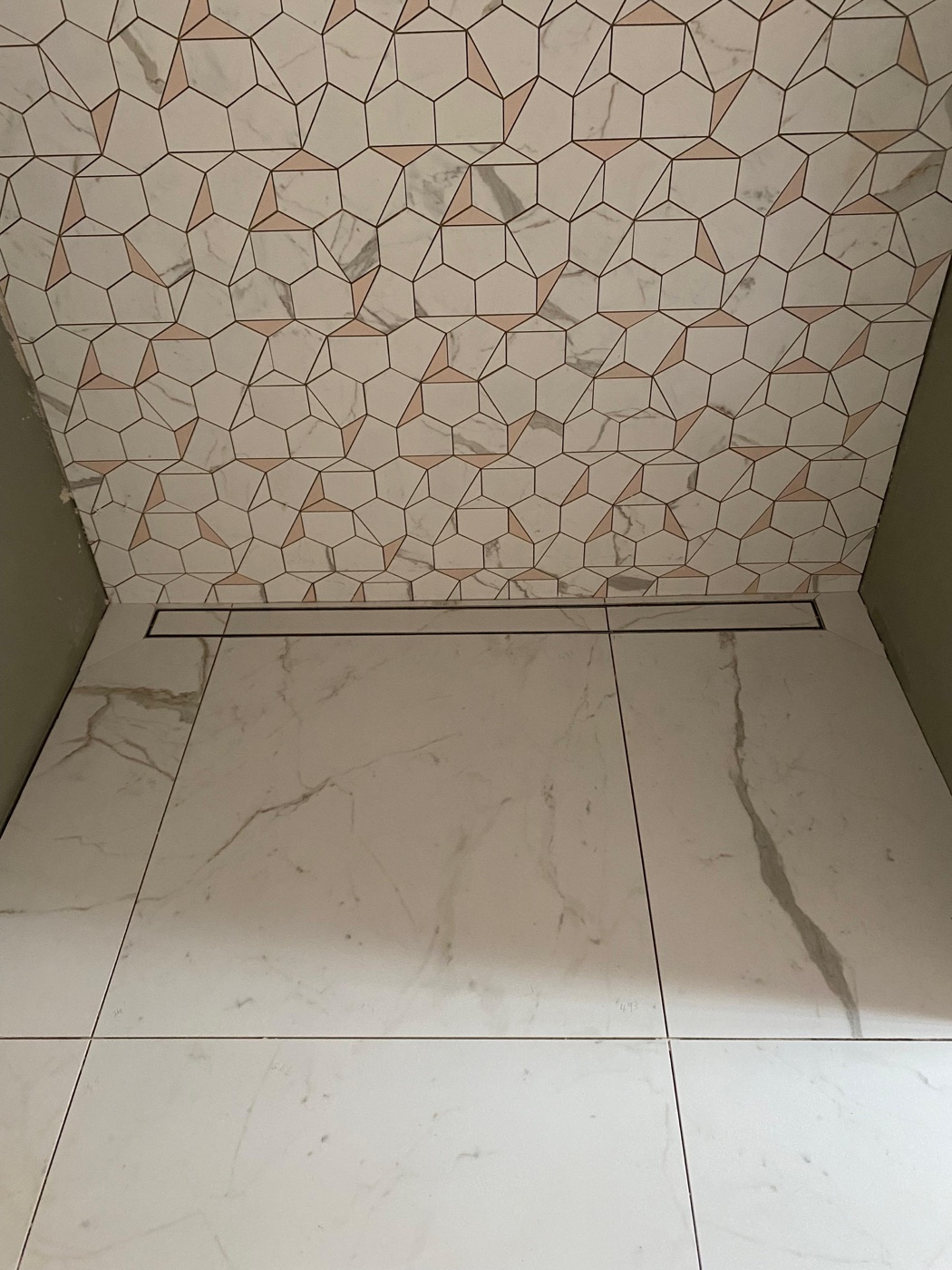 Calacatta gold hexagon mosaic bathroom, Bromley — mesh-backed mosaic sheets with gold inlay. Complex setting-out across floor and walls, with alignment of the hexagon pattern maintained throughout. Mosaic tiling service
Mosaic tile
Mosaic tiles are small tiles supplied on mesh backing sheets. Formats range from 20x20mm squares to 25x50mm bricks to hexagonal shapes. The mesh backing allows the whole sheet to be positioned and pressed into the adhesive bed in one movement.
What it needs: Back-buttering the sheets and pressing each tile individual to ensure full adhesive contact. Grouting in sections. More grout lines than larger format tiles.
Where it works: Shower floors (small format provides grip on a graded surface), feature inserts, borders, decorative panels.
Choosing the right tile type for your project
The right material depends on three things: where it is going, what traffic and moisture it will face, and how much maintenance you are willing to do.
For a busy family bathroom floor: porcelain. For a luxury wet room: large format porcelain or marble if properly installed. For a kitchen splashback: zellige, porcelain, or ceramic. For a period hallway: encaustic cement tile or terracotta-effect porcelain. For a contemporary hallway: large format porcelain or stone-effect porcelain.
If you are unsure what suits your specific project, get in touch for a free quote and I will advise you directly.
FAQ
What is the difference between porcelain and ceramic tiles? Porcelain is denser, harder, and less porous than ceramic. It is fired at higher temperature from a different clay mix. Porcelain suits floors and wet areas; ceramic is more suitable for dry wall applications.
Is natural stone hard to maintain in a bathroom? More demanding than porcelain, yes. Natural stone needs sealing at installation and regular re-sealing thereafter. Marble in particular stains if liquids are left on it. In return you get a surface that looks exceptional and improves with age if cared for properly.
What type of tile is best for shower walls? Porcelain is the most practical: non-porous, easy to clean, available in every style. Natural stone can be used with correct installation. Avoid very porous tiles without proper sealing and waterproofing behind them.
What is encaustic tile? A cement-based tile with a pressed colour pattern through the surface. Not glazed. Traditional Victorian hallway tiles are typically encaustic. They need careful sealing at installation and regular maintenance.
Related reading: Marble in the bathroom · Zellige tiles guide · Bathroom tiles complete guide · How to spot good tiling · Marble and natural stone tiling service
Got a specific question? Call me on 07990 521717 , see the porcelain tiling service, or use the contact form — I'm happy to give advice with no obligation.