Porcelain vs Ceramic Tiles: What Actually Matters When You're Choosing
The real differences between porcelain and ceramic tiles for bathrooms and kitchens, explained by a tiler who installs both every week. Which lasts, which doesn't, and when ceramic is genuinely fine.
Every bathroom project starts with this question. The homeowner has been looking at tiles online, they’ve found something they like, and then they notice one is labelled porcelain and another is labelled ceramic. The prices are different. The descriptions sound similar. And nobody in the showroom gives them a straight answer about whether it actually matters.
It matters. But not always in the way the marketing suggests.
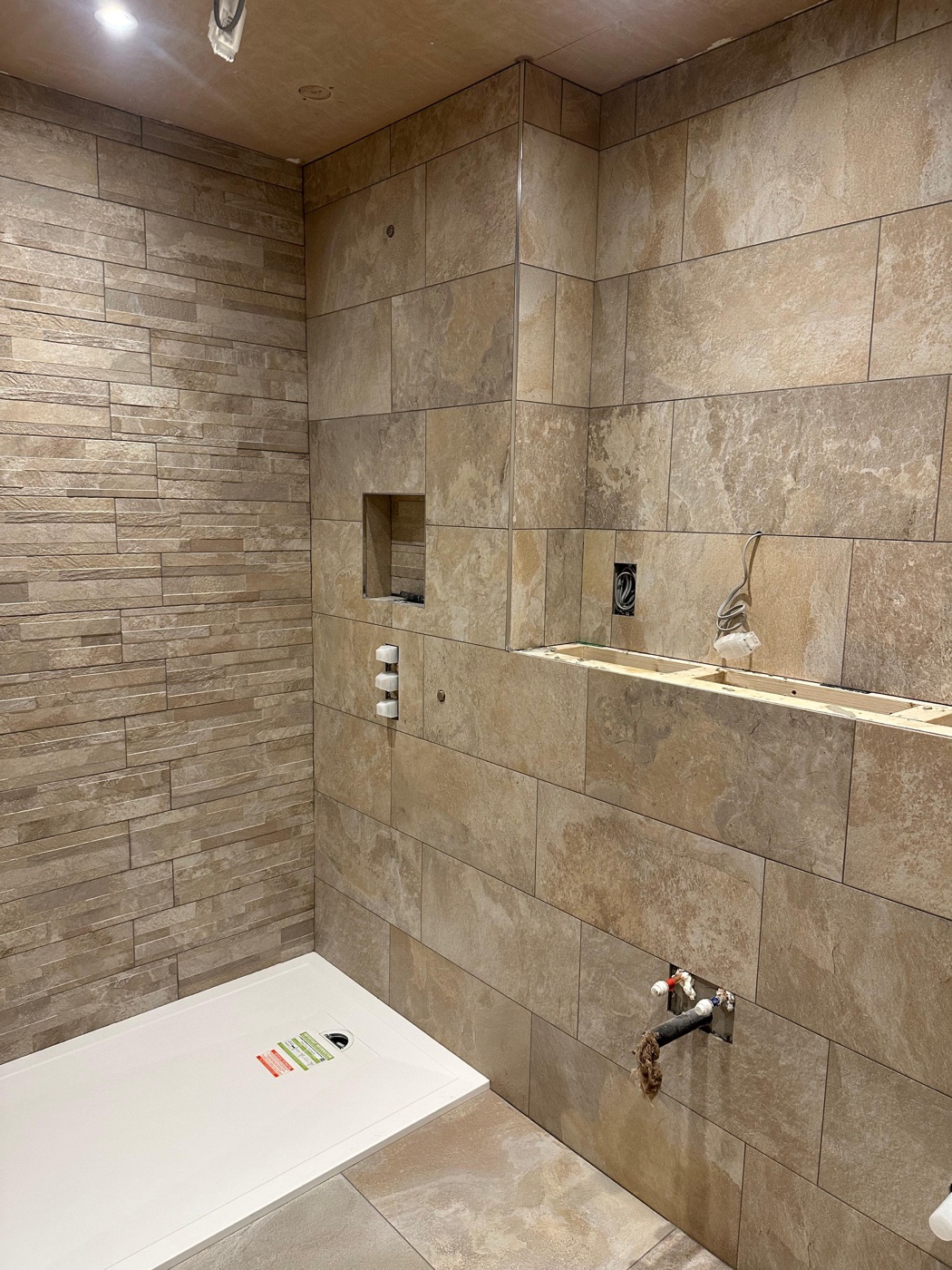 Stone-effect porcelain shower, West Wickham. This is a wet area that gets daily use. Ceramic would not be the right choice here. Porcelain handles the moisture, the cleaning products, and the thermal cycling from hot showers without deteriorating. Bathroom tiling service
What the difference actually is
Porcelain and ceramic are both fired clay. The difference is in the clay composition, the firing temperature, and the resulting density.
Ceramic tiles are made from a softer clay body, fired at lower temperatures. The surface is glazed to provide the colour and pattern. Underneath the glaze, the body of the tile is porous and relatively soft.
Porcelain is made from a denser, more refined clay, fired at significantly higher temperatures. The result is a tile body that is hard throughout its thickness. The water absorption rate is below 0.5%, which is the technical classification threshold. Many good porcelain tiles are below 0.1%.
This isn’t a marketing distinction. It’s a material property that determines how the tile performs over ten, twenty, thirty years.
Where porcelain is the right choice
Bathroom floors. Water sits on bathroom floors. People step out of the shower, water pools, droplets collect around the base of the toilet. A porcelain tile handles this without absorbing moisture into its body. A ceramic floor tile absorbs water through micro-cracks in the glaze and through the unglazed edges. Over years, this causes discolouration, softening, and in some cases mould growth within the tile body itself.
Shower walls. The inside of a shower enclosure is a relentlessly wet environment. Hot water, steam, daily thermal cycling, cleaning chemicals. Porcelain handles all of this. Ceramic can handle it for a while, but the constant moisture exposure finds any weakness in the glaze and exploits it.
Kitchen floors. Kitchens take more punishment than any other room. Dropped pans, heavy appliances being moved, concentrated cleaning products, grease. Porcelain’s hardness and density make it the right choice here. I’ve seen ceramic kitchen floors chip and wear within three to four years in busy households.
Wet rooms. Non-negotiable. A wet room floor and walls must be porcelain. The entire room is a wet area, there is no tray to contain the water, and the tile is the last line of defence above the tanking membrane. Ceramic in a wet room is a failure waiting to happen.
Underfloor heating. The thermal cycling from underfloor heating adds stress to the tile and adhesive bond. Porcelain’s density means it handles this better than ceramic, which can develop hairline glaze cracks from repeated heating and cooling.
Where ceramic is genuinely fine
I install ceramic tiles regularly. They’re not a bad product. They’re a product with a specific set of appropriate uses.
Dry bathroom walls. The wall above the basin, the wall opposite the shower, a half-height feature wall in a cloakroom. These surfaces rarely get wet, never bear weight, and ceramic tiles are lighter (easier on the wall fixings), easier to cut (less wastage, faster installation), and cheaper.
Kitchen splashbacks in low-use areas. A backsplash behind the kettle or next to the fridge doesn’t face the same demands as the tiles behind the hob. Ceramic is adequate here, and the decorative glaze options in ceramic are often broader than in porcelain.
Feature walls and decorative panels. If the purpose is decorative rather than functional, and the surface won’t face water or impact, ceramic offers more variety in handmade finishes, unusual glazes, and decorative patterns.
The price question
Porcelain typically costs 30 to 50 percent more than ceramic at the retail level. The installation cost is the same or slightly higher (porcelain is harder to cut, which adds modest time). But the calculation that matters is lifetime cost, not purchase cost.
A porcelain bathroom floor installed correctly will last the lifetime of the bathroom without replacement. I have clients with porcelain floors I installed fifteen years ago that still look as they did on day one. Ceramic floors in wet environments deteriorate. They may need replacement within eight to ten years, particularly in family bathrooms with heavy use.
The cost of re-tiling a bathroom floor — including removing the old tiles, re-preparing the substrate, and re-installing — is significantly more than the price difference between porcelain and ceramic would have been at the outset.
What about porcelain that looks like ceramic?
There are porcelain tiles manufactured to look like handmade ceramic — with the slight colour variation, the uneven glaze surface, the artisan character. You get the aesthetic of ceramic with the performance of porcelain. These are more expensive than either standard ceramic or standard porcelain, but they solve the problem elegantly if you want the look without the compromises.
The installation difference
From my side of the job, porcelain and ceramic require different handling.
Cutting. Porcelain requires a wet cutter with a diamond blade. Ceramic can be scored and snapped for straight cuts and drilled more easily. This means porcelain takes slightly longer to install when there are many cuts — around perimeters, around fixtures, at niches. For a bathroom with a lot of cuts, this adds time to the job.
Adhesive. Both need the correct adhesive class for their intended use. Porcelain on floors needs a C2 flexible adhesive. Ceramic on walls can use a C1 standard adhesive. Using the wrong adhesive class is a common cause of tile failure, and it’s invisible until the tile de-bonds months later.
Weight. Porcelain is heavier. For wall installations, particularly on plasterboard or old lime plaster, the additional weight needs consideration. The fixings, the substrate condition, and the adhesive all need to account for the load. This rarely changes the recommendation — porcelain is still the right choice for wet walls — but it’s part of the assessment.
The honest recommendation
If a client asks me which to use, I tell them the same thing every time: porcelain for floors and wet areas, ceramic is fine for dry walls if the budget is tight. If the budget stretches to porcelain throughout, use porcelain throughout. You’ll never regret specifying porcelain. You might regret specifying ceramic in a place where it was asked to do more than it can.
The material costs a bit more. The tile lasts a lot longer. That’s the calculation.
For specific advice on your project, get in touch for a free quote. I’ll tell you where porcelain is essential and where ceramic would do the job just as well. See also: types of tiles explained for a broader comparison including natural stone, zellige, and more.
Got a specific question? Call me on 07990 521717 , see the porcelain tiling service, or use the contact form — I'm happy to give advice with no obligation.