Natural Stone Tile Care: How to Maintain Marble, Limestone and Travertine
A practical guide to caring for natural stone tiles in UK homes. Sealing, cleaning, restoration, and what causes irreversible damage.
I install natural stone tiles regularly across Bromley and South East London. Marble bathrooms, limestone kitchen floors, travertine hallways, slate wet rooms. Stone is one of the most beautiful materials I work with. It is also the most demanding to live with, and most of the problems clients have with stone come from not understanding what it needs.
This guide is what I tell clients before I install stone, and what I wish more clients knew before they call me to assess damaged stone.
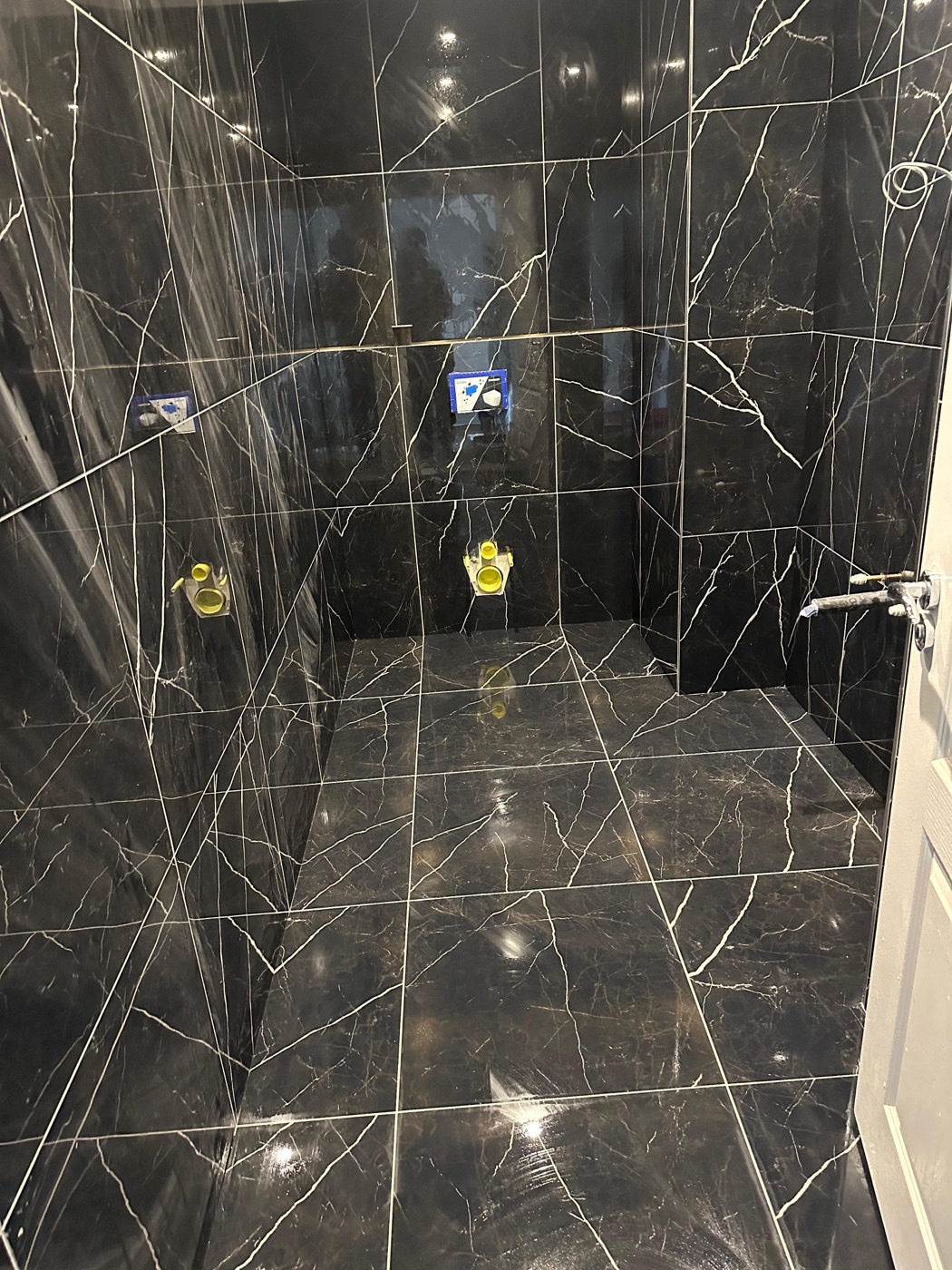 Nero Marquina marble wet room, Bromley. Black marble in a wet area is one of the most demanding tile installations possible. The maintenance commitment is real, but the result has a quality nothing else can match. Marble and natural stone service
Understand what stone is
Natural stone is porous. The level of porosity varies by type, but every natural stone absorbs liquid to some degree. Water, oils, wine, coffee, cleaning products, and acidic foods can penetrate the surface and cause staining or chemical damage if the stone is unprotected.
Stone is also calcium-based in most cases (marble, limestone, travertine). This means it reacts chemically with acids. Even mild acids — vinegar, lemon juice, certain cleaning products — cause etching that dulls the surface permanently.
These two properties (porosity and acid sensitivity) drive everything you need to know about stone care.
Sealing: the first line of defence
Sealing creates a chemical barrier that reduces porosity and slows the rate at which liquids penetrate the stone. It does not make the stone waterproof or acid-proof, but it gives you time to wipe up spills before damage occurs.
Two types of sealer
Penetrating (impregnating) sealers soak into the stone and bond chemically with the mineral structure. They do not change the appearance of the stone — the natural finish is preserved. This is the right choice for most domestic stone.
Topical sealers create a film on the surface of the stone. They can change the appearance (often making it more glossy) and they wear with foot traffic. Less common for domestic use.
When to seal
Before grouting. All natural stone should be sealed before the grouting stage. Without this, grout haze will absorb into the porous stone face during grouting and become impossible to remove cleanly. This is part of the installation, not optional, and any tiler installing natural stone should know it.
Within the first month after installation. A second coat of sealer once the stone has had time to dry and any installation moisture has dissipated.
Re-seal periodically. Use the water test to check: drop a small amount of water on the stone surface. If it beads up and stays on the surface, the seal is intact. If it absorbs into the stone within 60 seconds, the seal has failed and re-sealing is needed.
How often re-sealing is needed
Highly variable. Approximate guide:
- High-use bathrooms and showers: Annually
- Kitchen floors: Every 1-2 years
- Hallway floors: Every 2-3 years
- Lightly used rooms: Every 3-5 years
- Vertical wall installations: Less frequently (less wear, less liquid contact)
Premium sealers from manufacturers like LTP, Aqua Mix, or StoneTech last longer than budget alternatives. The product cost is small compared to the labour of sealing, so use the best available.
Cleaning: what to do and what to avoid
This is where most stone gets damaged. The wrong cleaning product can permanently mar a beautiful stone surface.
What to use
pH neutral stone cleaner. Specifically formulated for natural stone. LTP, Lithofin, and Aqua Mix all make appropriate products. Available from tile suppliers and online.
Plain warm water and a soft cloth. For routine cleaning, water alone is usually adequate.
Microfibre cloths. Soft, non-abrasive, lift dust without scratching.
What to avoid (this list matters)
Vinegar. Acidic. Etches calcium-based stone permanently.
Lemon juice or any citrus-based cleaner. Acidic. Etches.
Bleach. Damages the seal and can react with certain stones to cause discolouration.
Standard supermarket bathroom cleaners. Most contain mild acids or alkalis that degrade stone over time. Read the label — if it does not specifically state “safe for natural stone”, do not use it.
Abrasive scouring pads. Scratch the surface and damage the polish.
Cream cleansers with abrasives. Same problem as scouring pads.
Steam cleaners. The high temperature and pressure can damage the stone surface and the sealer.
Spill response
If something spills on natural stone, wipe it up immediately. Do not let it sit. Wine, coffee, fruit juice, cooking oil, and acidic foods can all cause damage if left in contact with the stone for more than a few minutes.
Use a clean cloth and plain water to remove the spill. Do not rub aggressively. If the stone is showing a stain after cleaning, contact a stone restoration specialist before trying any further cleaning products.
What damages stone permanently
Some damage to natural stone cannot be repaired with home cleaning. Knowing what causes it helps you avoid it.
Acid etching. The most common irreversible damage in domestic settings. Vinegar, lemon juice, acidic cleaners, or even certain mineral waters can etch the surface. The damage looks like a dull patch where the polish has been removed. Restoration requires diamond honing by a specialist.
Iron staining. Iron from rusty objects (cans, cast iron, certain metal furniture) can leach into porous stone and create orange-brown stains that penetrate beyond the surface. Often impossible to remove without specialist treatment.
Oil stains. Cooking oil, grease, or hair products can absorb deep into stone and cause dark patches that resist cleaning. Poultice treatments can sometimes draw the oil out, but this is a specialist process.
Crystallisation damage from incorrect sealers. Using a topical sealer on stone that needs to breathe (like exterior limestone) can trap moisture and cause the stone to spall (flake) over time.
Cracks from impact or substrate movement. Stone tiles cannot be repaired — they must be replaced. The cause needs to be addressed first or the new tile will crack too.
Restoration: when to call a specialist
Some damage to stone can be restored. The level of intervention depends on the severity:
Light etching and dull patches: A stone restoration specialist can polish out surface damage with diamond pads. Relatively quick, modest cost.
Deeper etching, scratches, or worn polish: Diamond honing followed by re-polishing. More involved process, higher cost, but can fully restore the original finish.
Cracks and chips: Generally not repairable. The damaged tile or stone slab needs replacing. Sourcing matching stone for old installations can be difficult.
Severe staining or chemical damage: Specialist poultice treatments, sometimes combined with honing. Mixed success rate depending on the cause and how long the damage has been present.
For domestic installations across South East London, look for a stone restoration specialist (different from a tiler). Most tilers, including me, can install stone but do not provide restoration services — the tooling and expertise are different.
Should you choose natural stone for your renovation?
After 44 years of installing stone, my honest advice:
Choose stone if:
- You love the depth and character that only real stone provides.
- You accept the maintenance commitment and will follow it.
- You have the budget for both the material and the ongoing care.
- The room has appropriate use patterns (a stone bathroom in a master en-suite, not a children’s bathroom that gets bleach cleaned every week).
Choose porcelain if:
- You want the look without the commitment.
- The room sees heavy or careless use.
- You want minimum maintenance.
- The budget is limited and stone is a stretch.
Porcelain in 2026 has become extremely convincing as a stone alternative. Premium stone-effect porcelain at 2-3 metres viewing distance is genuinely difficult to distinguish from natural stone. For most domestic settings, this is the practical choice.
For natural stone installation done properly across Bromley and South East London, get in touch. I will assess your project, advise on material choice and care, and install with the techniques the stone requires. See also: marble in the bathroom | types of tiles explained | porcelain vs ceramic tiles
Got a specific question? Call me on 07990 521717 , see the marble and natural stone service, or use the contact form — I'm happy to give advice with no obligation.