Matte vs Gloss Tiles: Which Finish Works Where (and Why It's Not Just About Looks)
A tiler's practical guide to choosing between matte and gloss tile finishes. Safety, cleaning, light, slip resistance, and what actually happens in bathrooms and kitchens over time.
Most of the advice online about matte vs gloss tiles treats it as a style decision. Pick whichever you prefer. Match it to your mood board. That’s fine as far as it goes, but it misses the things that actually determine whether you’ll still be happy with the choice in three years.
Tile finish affects slip resistance, cleaning, how light works in the room, how marks show, and how the surface ages. The right answer depends on where the tile is going, how the room is used, and how much light it gets. I’ll walk through each.
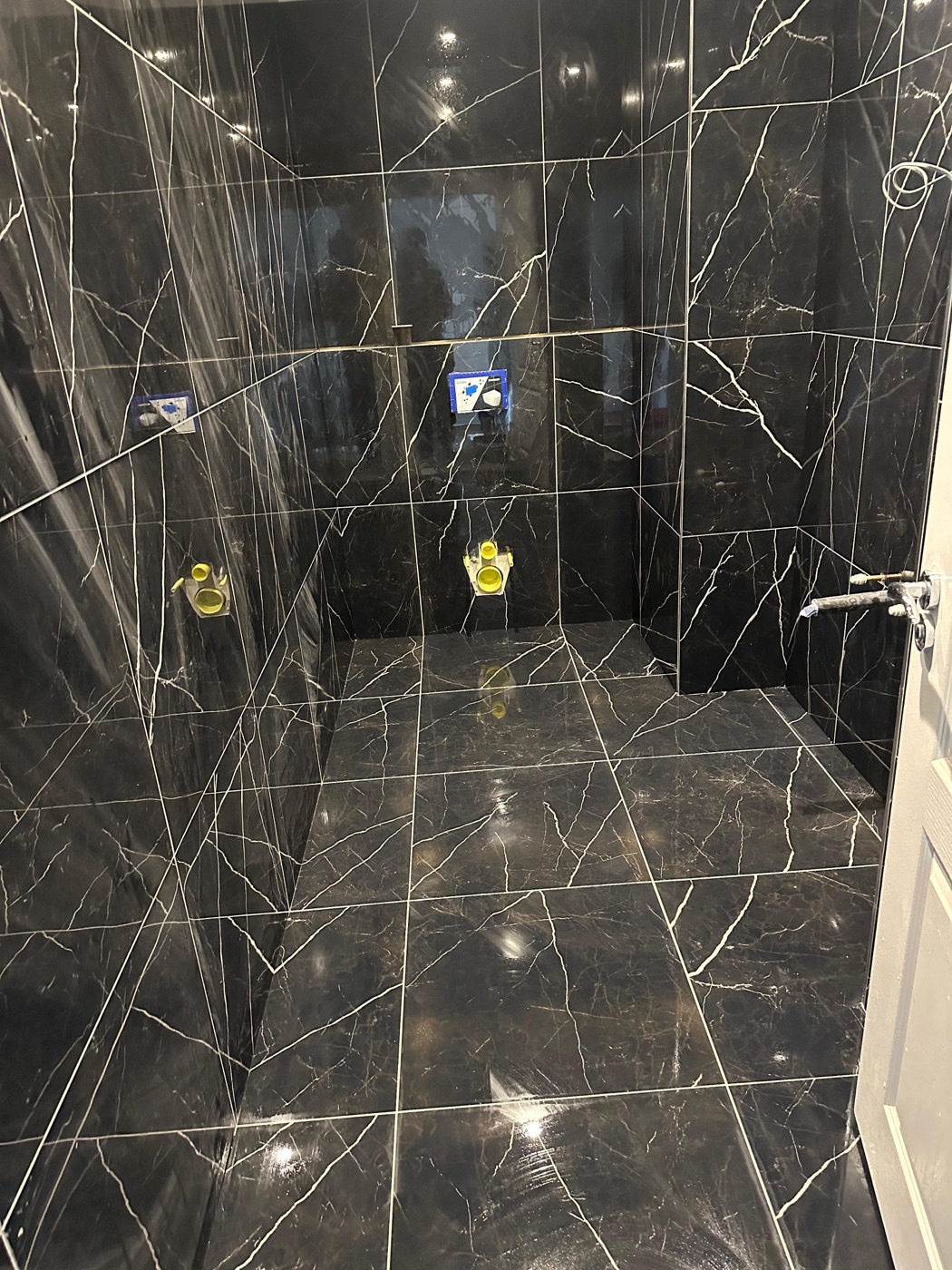 Nero Marquina marble wet room, Bromley. This is a honed (matte) marble finish. The lack of gloss hides water droplets, reduces reflection in a dark tile, and provides better grip underfoot. A polished gloss finish on this same stone in a wet room would be dangerously slippery. Marble and natural stone service
Floors: matte wins on safety
This is the one area where the answer is clear. Bathroom floors get wet. Kitchen floors get splashed. Hallway floors get muddy shoes.
Gloss tiles have a smooth surface that becomes slippery when wet. The coefficient of friction drops significantly. In a bathroom, where you step out of the shower onto wet tile, this is a genuine safety concern. I have seen bathrooms where clients chose a polished gloss floor tile for aesthetic reasons and regretted it within weeks.
Matte and textured finishes provide better grip. Tile manufacturers rate slip resistance on a scale from R9 (low grip) to R13 (high grip). For domestic bathroom floors, R10 or R11 is appropriate. Most matte and textured porcelain tiles meet this. Most gloss tiles do not.
If you want a bathroom floor that looks polished but isn’t dangerous, look at satin or semi-polished finishes. These have a subtle sheen without the full gloss surface, and many achieve a reasonable slip rating. But test them wet. Some satin finishes are nearly as slippery as full gloss.
For kitchen floors, the same principle applies. Cooking spills, water splashes from the sink, children running through. Matte is the practical choice.
Walls: it depends on the room
On walls, the safety question goes away. Nobody is standing on a wall tile. So the decision becomes about how the finish works with the room.
Gloss on walls reflects light. In a small bathroom with no window, or a north-facing bathroom with limited natural light, gloss wall tiles can make a meaningful difference. They bounce whatever light is available around the room, making it feel brighter and more open. White or pale gloss tiles in a small en-suite can make the room feel almost twice its size.
Matte on walls absorbs light. The effect is warmer, quieter, more textured. In a large bathroom with good natural light, matte tiles create a spa-like quality that gloss doesn’t achieve. The surface reads as more natural, particularly in stone-effect or concrete-effect tiles. Gloss porcelain trying to look like stone always looks like porcelain trying to look like stone. Matte porcelain can be convincing.
The trend direction in 2026 is strongly toward matte and textured finishes. The bathroom-as-spa aesthetic that dominates design magazines and Pinterest boards is driven by matte tiles in warm tones. But trends cycle. Gloss never goes away entirely because it solves a real problem in small, dark rooms.
Cleaning: different problems, not better or worse
The common claim is that gloss is easier to clean. The reality is more nuanced.
Gloss tiles have a smooth, impermeable surface. Spills, soap, toothpaste, and watermarks wipe off easily with a damp cloth. However, the smooth surface shows every mark. Water droplets leave visible spots when they dry. Fingerprints show. Toothpaste splatters are immediately visible. The tile is easy to clean but needs cleaning frequently to look good.
Matte tiles hide daily marks well. Water spots dry without leaving visible traces. Fingerprints don’t show. The tile looks consistent between cleans. However, the slightly textured surface can trap soap scum, body oils, and grime over time. These don’t wipe off with a quick cloth — they require periodic scrubbing with an appropriate cleaner. Matte tiles need less frequent cleaning but more effort when you do clean them.
Neither finish is objectively easier. Gloss needs a quick wipe every day or two to look good. Matte needs a proper clean once a week to prevent build-up. Most people find matte less work overall because they aren’t bothered by the invisible residue between deep cleans, whereas gloss forces you to notice every spot.
Colour and finish interaction
The finish changes how colours read.
A dark tile in gloss is dramatic — it reflects light, shows depth, and creates a high-contrast look. But it also shows every water mark and cleaning streak. Dark gloss in a shower is one of the highest-maintenance tile choices available.
The same dark tile in matte is forgiving. It reads as solid colour without the reflection. It hides water and marks. It’s why most tilers, including me, recommend matte or honed finishes for dark tiles in wet areas.
Light tiles are less affected by the choice. A white gloss tile and a white matte tile in the same room will read differently — the gloss brighter, the matte warmer — but neither will show marks as aggressively as a dark tile.
What I recommend
My standard advice, having tiled bathrooms and kitchens across Bromley and South East London for 44 years:
Bathroom floors: Matte, always. Slip resistance is non-negotiable.
Shower walls: Matte or satin. Water marks are constant in a shower and gloss makes them visible.
Bathroom walls outside the shower: Your choice. Small dark room, consider gloss. Large bright room, matte will look better.
Kitchen floors: Matte. Practical, safe, hides the daily reality of a kitchen.
Kitchen splashback: Either works. Behind the hob, matte hides grease splatter better. Behind the sink, gloss cleans easily.
Hallway and living areas: Matte or satin. These areas get the most foot traffic and matte hides wear better.
The best approach is often to mix: matte floors, gloss or satin walls. This gives you the safety and practicality underfoot with the light and brightness on the walls. Many of the bathrooms I tile use this combination.
For help choosing the right finish for your specific bathroom or kitchen, get in touch. I can advise based on the room size, light, and how you use the space. See also: bathroom tiles complete guide and choosing tiles for a small bathroom for more on making the right material choices.
Got a specific question? Call me on 07990 521717 , see the bathroom tiling service, or use the contact form — I'm happy to give advice with no obligation.