Kitchen Backsplash Tile Ideas for 2026: What Works and What to Avoid
The best kitchen backsplash tile ideas for 2026 — materials, colours, patterns, and practical advice on what looks good in real kitchens versus what only works in photos.
The kitchen backsplash is the tile surface people spend the most time looking at in daily life. It is in your eyeline at the hob, at the sink, every time you make a cup of tea. Getting it right matters. Getting it wrong is something you live with every day.
Here is what is working in kitchens across Bromley and South East London in 2026, and a few things that look good in pictures but cause problems in practice.
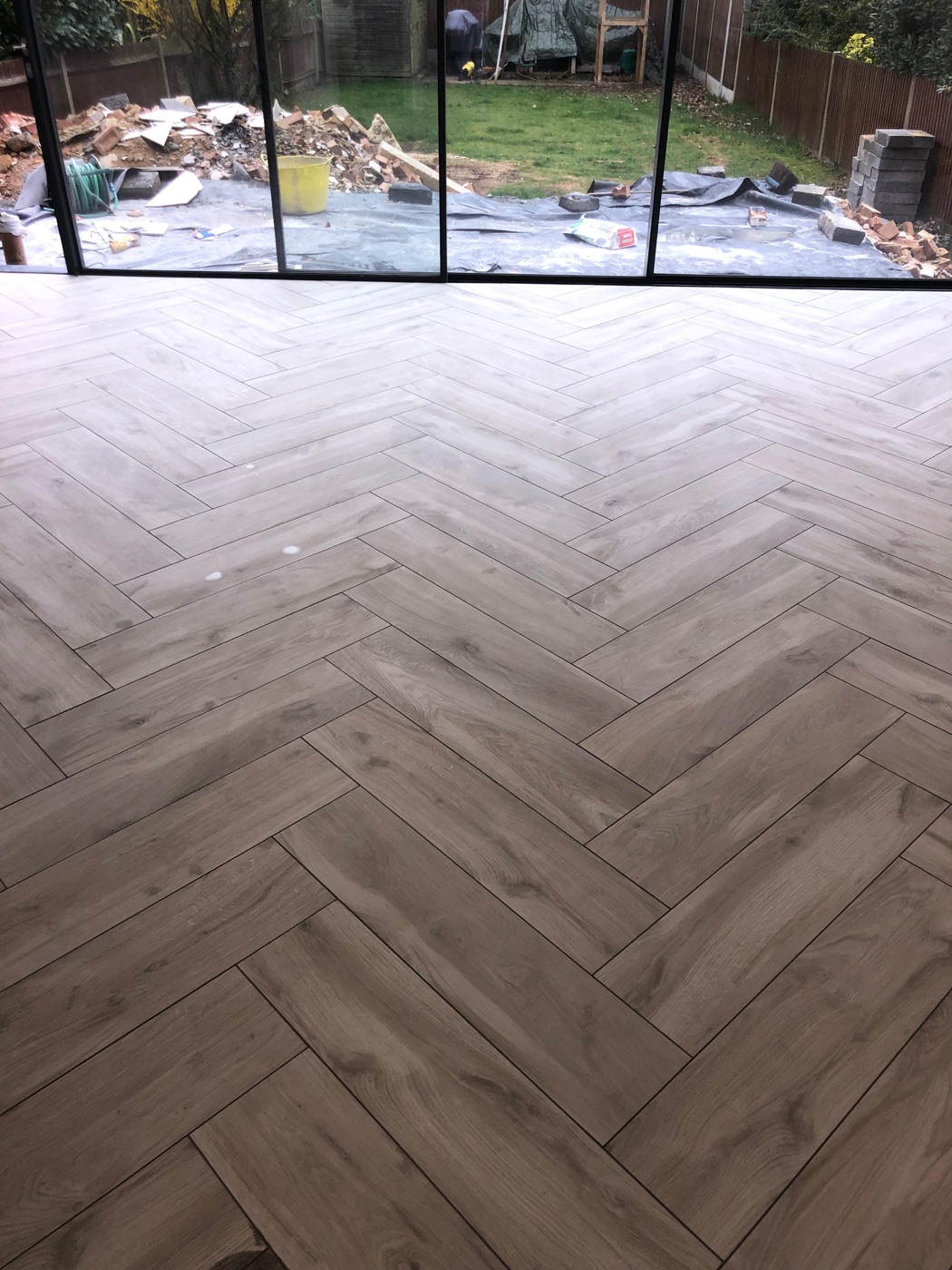 Grey herringbone kitchen floor, Orpington — a kitchen that gets the floor right. The same thinking applies to the splashback: the material, the pattern, and the scale all need to suit the room. Kitchen floor tiling service
The dominant directions for 2026
Warm tones throughout. Cool grey splashbacks are giving way to warm amber, caramel, terracotta, and sage. This mirrors what is happening in bathroom tile (see bathroom tile trends 2026) and reflects a broader shift in how people want their homes to feel. Warmer, more natural, less like a showroom.
Zellige behind the hob. Zellige tiles in amber or sage behind a hob is one of the most requested looks right now. The handmade quality reads beautifully in a kitchen. The variation in glaze catches light from overhead spotlights. It works in both contemporary kitchens and period ones.
Large format on the whole run. Rather than a short splashback between the worktop and the unit above, more people are running the tile from worktop to ceiling, or worktop to the underside of the overhead unit. This reads cleaner, particularly in a galley kitchen, because the whole wall becomes one surface.
Fluted tile as a feature. Vertical ribbed tiles on a kitchen splashback are a strong direction for 2026. They add physical texture without a busy pattern, catch light across the ribs, and suit a wide range of kitchen styles. They work especially well in neutral tones.
What suppliers are worth looking at
For premium kitchen tile in the UK, Fired Earth, Mandarin Stone, Topps Tiles, and Porcelanosa all carry strong kitchen ranges at different price points. Bert and May is worth looking at if you want handmade and characterful. For budget options without compromising on a solid tile, Topps and B&Q trade ranges are better than they used to be.
Practical considerations that matter
Behind the hob. This is a high-heat, high-grease area. Porcelain is the most practical choice here because it is non-porous, does not absorb grease, and can handle temperature variation. Zellige and handmade tiles are fine here too, but they need to be sealed properly and the grout needs to be a stain-resistant type. Natural stone behind a hob is possible but higher maintenance.
Grout colour. More important on a kitchen splashback than almost anywhere else because you see it up close every day and it is in a messy environment. Light grout in a busy cooking area shows grease and food quickly. A mid-tone or dark grout in a stain-resistant formulation is more practical. I use an epoxy or near-epoxy grout in kitchens regularly.
The height question. If you are running tile from worktop to ceiling, the tile needs to work at scale. A small format tile on a tall wall looks restless. Large format tile reads better over a big vertical run. Conversely, small format mosaic or zellige reads beautifully over a short splashback between worktop and wall unit.
Substrate. Kitchen walls are often plasterboard with varying fixings and services behind them. The substrate needs to be solid and flat before tiling. Anything that flexes will crack the tile or the grout joint over time. I always check for flex before laying.
Patterns that work on kitchen splashbacks
Herringbone. A rectangular tile in herringbone on a kitchen splashback is one of the most enduringly popular patterns. It adds interest without being busy. Works in both metro format (75x150) and slightly larger formats (100x200). Good for period kitchens and contemporary ones alike.
Vertical stack bond. Running rectangular tiles in a vertical stack (all joints aligned) looks architectural and slightly unexpected. Works best with a plain matte tile where the grout line contributes to the pattern.
Straight lay, full run. Nothing wrong with a clean straight lay on a kitchen splashback. A wide format matte tile from worktop to ceiling in a warm tone is simple, easy to clean, and will not date.
Feature panel. One section of the splashback, typically behind the hob, in a different tile to the rest. A zellige feature behind the hob with a plainer tile either side is a common approach. Gives the visual interest where it matters without complicating the whole room.
What to avoid
Highly textured tile near the hob. Deep relief or heavily textured tiles trap grease and are difficult to clean near a cooking area. Keep texture for the parts of the splashback away from the hob or use a smoother textured tile where cleaning is easier.
Very small mosaic on a large run. Small mosaic tiles on a full wall from worktop to ceiling create a lot of grout lines in a very visible area. Each grout line is a potential cleaning challenge. The scale needs to match the area.
Tiles that need constant sealing. Natural stone on a kitchen splashback is beautiful but requires regular resealing to stay grease-resistant. If you do not want the maintenance, choose porcelain with a natural stone effect.
For a kitchen floor to match, see kitchen floor tile guide. For advice on what will work in your specific kitchen, get in touch for a free quote.
FAQ
What is the most popular kitchen backsplash tile for 2026? Zellige in amber or warm sage behind the hob is very popular. Fluted matte tiles, large format warm-toned porcelain, and herringbone rectangular tiles are all strong directions in 2026.
What tile is easiest to keep clean as a kitchen splashback? Porcelain with a smooth or low-texture surface and a dark or mid-tone stain-resistant grout. Highly textured tiles and natural stone both require more maintenance near a hob.
How high should a kitchen backsplash go? Standard is from worktop to the underside of the wall unit above, typically 450-600mm. Many people now run tile from worktop to ceiling for a cleaner, more architectural look. Both are valid; choose based on the kitchen proportions and the tile format.
Can you use the same tile on the kitchen floor and splashback? You can, but consider the scale. A large format floor tile used on the splashback may read as too heavy on the wall. A tile that works on both surfaces is usually a mid-format one. Read more about kitchen floor tiles.
Related reading: Zellige tiles: the complete guide · Kitchen floor tile guide · Herringbone tiles in bathrooms · Kitchen floor tiling service across Bromley
Got a specific question? Call me on 07990 521717 , see the kitchen tiling service, or use the contact form — I'm happy to give advice with no obligation.