Fluted and Textured Tiles: The 2026 Trend That's Actually Worth Following
Why fluted, ribbed, and 3D textured tiles are dominating UK bathrooms and kitchens in 2026. What they look like in real homes, what the installation involves, and what to watch out for.
Every year produces bathroom trends that look good in a magazine shoot and terrible in a real house eighteen months later. Fluted tiles are not one of those. They’re worth taking seriously.
The interest in textured, three-dimensional tiles has been building for several years, but 2026 is the year they’ve moved from design-magazine feature to mainstream bathroom renovation. I’m being asked about them on almost every site visit now. Here’s what you need to know before committing.
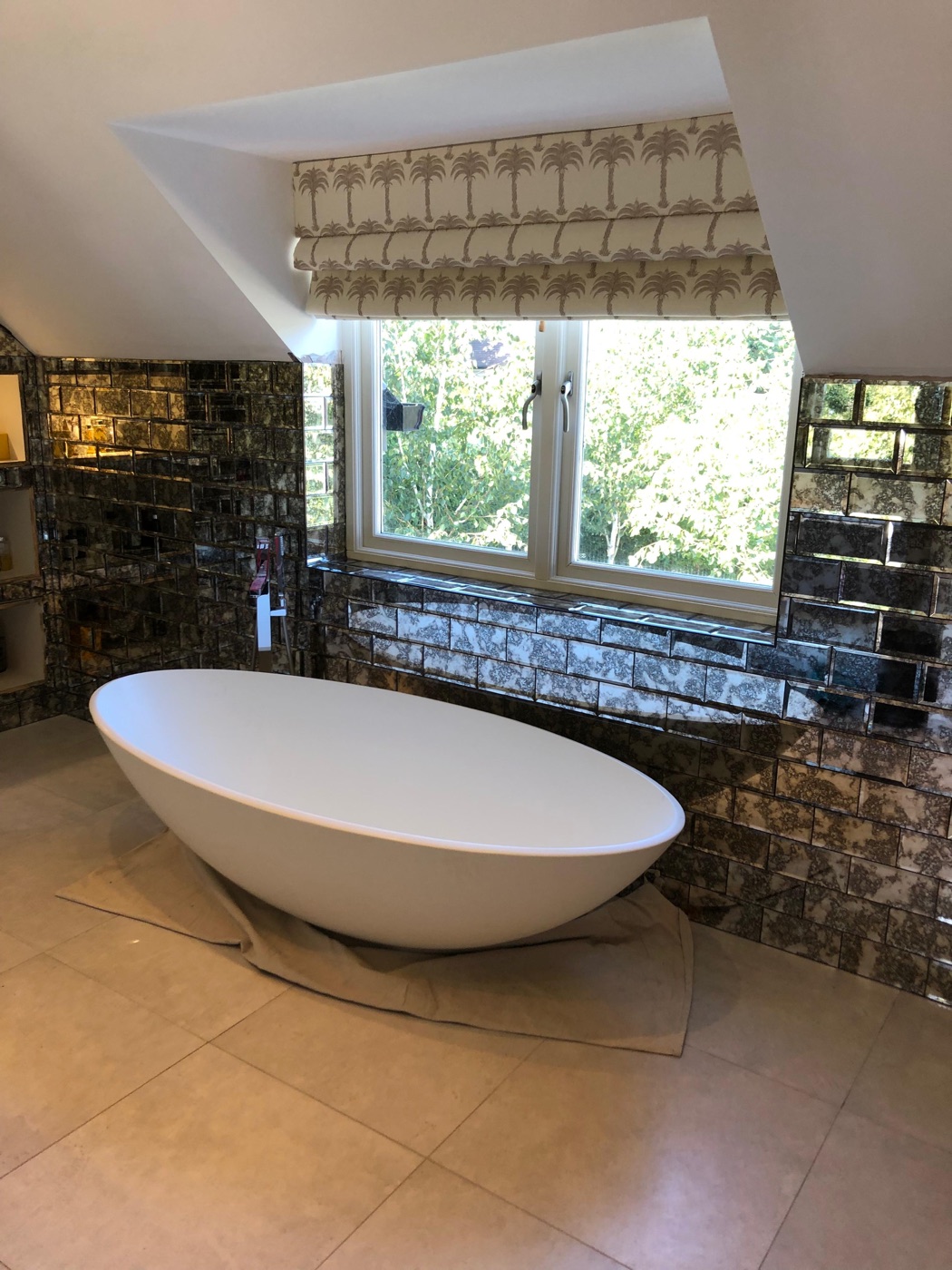 Luxury bathroom, Bromley. Textured and reflective surfaces create depth and character that flat tiles alone cannot achieve. The current trend toward fluted and ribbed tiles follows the same principle: surfaces that change with the light and invite touch. Bathroom tiling service
What the fuss is about
Fluted tiles have vertical grooves — parallel ridges that run the length of the tile. When light hits them, the ridges create shadow lines that give the wall depth and movement. As the light changes through the day, the shadows shift. In the morning, direct light emphasises the grooves. In the evening, raking light deepens them. Under spotlights, the effect is dramatic.
This is the quality that flat tiles, however beautiful, cannot deliver. A flat white tile is a flat white tile at any time of day. A fluted white tile is different at 8am and 8pm. It responds to light in a way that makes it feel alive.
The same principle applies to other textured tiles — wave patterns, organic ripples, geometric relief, 3D hexagons. They all add a dimension that flat tiles do not have. But fluted is the cleanest and most versatile expression of it.
Where to use them
Bathroom feature walls. A single wall of fluted tile behind the basin or bathtub, with flat tiles elsewhere. This is the most common application and the most effective. The textured wall becomes the focal point. The flat tiles provide calm. The contrast makes both work harder.
Shower accent walls. One wall of the shower in fluted tile, the other two in matching flat tile. This works particularly well in walk-in showers where one wall is visible from the bathroom. The texture adds visual interest without making the shower enclosure feel busy.
Vanity backsplashes. A short run of fluted tile above a vanity unit catches the light from mirror-adjacent spotlights beautifully. The grooves frame the mirror and give the vanity area a built-in, considered look.
Kitchen island fronts. Fluted tile on the front face of a kitchen island is a distinctly 2026 idea. It adds texture and interest to what is usually a flat panel, and it works particularly well in kitchens that are otherwise minimal.
Kitchen splashbacks. Fluted tile behind the hob or across the full kitchen backsplash. Beautiful, but see the cleaning caveat below.
Where not to use them
Floors. Fluted tiles are wall tiles. The grooves on a floor would trap dirt and feel uncomfortable underfoot. No reputable manufacturer rates fluted tiles for floor use.
Entire rooms. Covering all four walls of a bathroom in fluted tile creates sensory overload. The texture that reads as elegant on one wall becomes oppressive when it surrounds you. The rule with texture is restraint: one surface, not every surface.
Behind the hob without commitment to cleaning. The grooves trap cooking grease. A flat tile behind the hob wipes clean in seconds. A fluted tile behind the hob needs a soft brush and degreaser worked into the channels. If you’re the kind of household that wipes the splashback after every cooking session, fluted works. If the splashback goes a fortnight between cleans, you’ll have build-up in the grooves.
Installation specifics
Fluted tiles are straightforward to install in most respects, but there are a few things that differ from flat tile.
Alignment is critical. The grooves need to run continuously from tile to tile. If one tile is a fraction of a millimetre higher or lower than its neighbour, the shadow line is broken and the eye catches it immediately. The substrate must be flat. The spacers must be precise. There is no room for the slight imprecision that a flat tile can absorb.
Grout visibility. The horizontal grout line between vertically-grooved tiles is more visible than between flat tiles, because the grooves create a regular rhythm that the grout line interrupts. Matching the grout colour to the tile minimises this. Contrasting grout on fluted tile creates a distracting horizontal interruption every 300mm.
Cutting. Cuts through the grooves need to be clean. A rough cut on a flat tile can be hidden at a corner or behind trim. A rough cut through a fluted tile is immediately visible because the groove pattern is disrupted. A wet cutter with a good diamond blade is essential.
Internal corners. Where two fluted walls meet at an internal corner, the grooves from each wall need to meet cleanly. This requires careful planning and cutting. A poorly executed internal corner on fluted tile is extremely visible.
Which fluted tiles to choose
Colour. White and off-white are the most popular and the most versatile. They let the shadow do the work. Warm neutrals — sand, oat, soft sage — are the 2026 direction and add colour without competing with the texture. Dark fluted tiles are dramatic but show dust and water marks in the grooves.
Material. Porcelain is preferable for wet areas. Ceramic is adequate for dry feature walls. Some zellige manufacturers produce fluted or ribbed zellige, which combines the handmade variation of zellige with the dimensional quality of fluting. The result is stunning but expensive and demanding to install.
Scale. Larger tiles (300x600 or bigger) with wider grooves read as more architectural and contemporary. Smaller tiles with finer grooves read as more decorative. Match the scale to the room and the aesthetic.
Finish. Matte fluted tile shows shadow most effectively. A satin finish adds a subtle sheen to the ridges. Gloss fluted tile is available but the reflection competes with the shadow, reducing the three-dimensional effect that is the whole point.
For advice on incorporating fluted or textured tiles into your bathroom or kitchen renovation, get in touch. I can show you how the texture works with your specific lighting and room layout. See also: bathroom tile trends 2026 | kitchen backsplash tile ideas
Got a specific question? Call me on 07990 521717 , see the bathroom tiling service, or use the contact form — I'm happy to give advice with no obligation.