Encaustic and Cement Tiles: The Patterned Tile Making a Serious Comeback
What encaustic and cement tiles are, where they work, how they differ from porcelain reproductions, and what the maintenance commitment actually involves.
Encaustic and cement tiles are having their strongest moment since the Victorian era that created them. Pinterest is full of them. Instagram bathroom renovations feature them. Tile showrooms give them prominent display space. The colourful, geometric, Mediterranean-inspired patterns are genuinely striking.
They are also genuinely demanding to live with. And many of the “encaustic” tiles people buy are actually porcelain reproductions that have none of the characteristics (good or bad) of the real thing.
This guide separates the facts from the marketing.
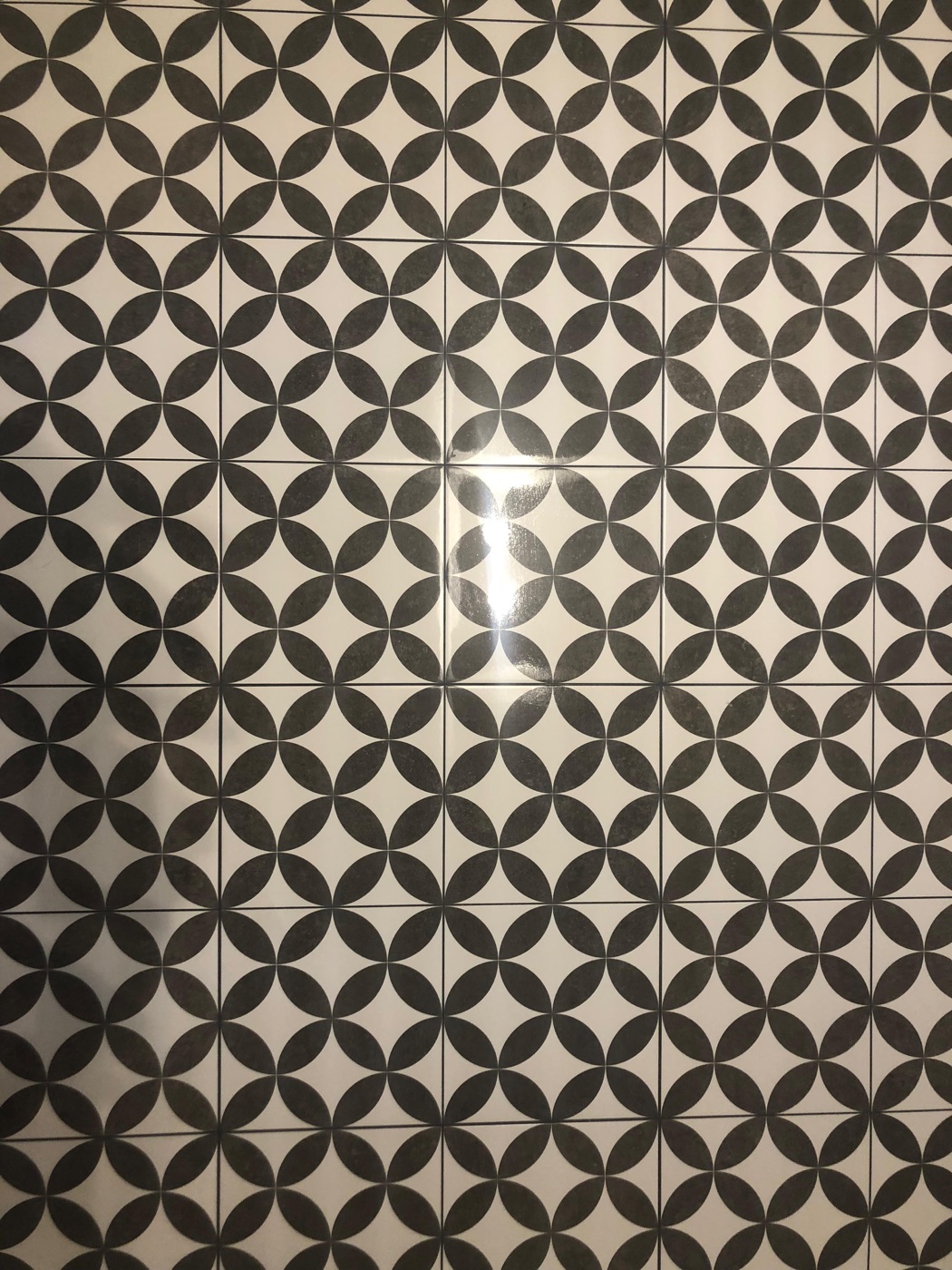 Classic black and white circle floor, Dartford. Period geometric tiling that has survived decades because the specification and installation were correct. Modern encaustic patterns draw on this same heritage. Pattern tiling service
What encaustic tiles actually are
The word “encaustic” has become a catch-all term for patterned tiles, but it has a specific meaning.
True encaustic tiles are made by pressing different coloured clays into a tile mould. The colours are integral to the tile body — they go through the full thickness, not just the surface. When a true encaustic tile wears, the pattern remains visible because the colour is not a surface layer.
Cement tiles (also called hydraulic tiles) are made by pressing layers of coloured cement into a mould. They are not fired — the cement cures and hardens naturally. The pattern is a surface layer of coloured cement, typically 3-5mm deep, over a base of plain cement. The tile is thick (typically 16-20mm) and heavy.
Porcelain reproductions are standard porcelain tiles with a digitally printed pattern on the surface that mimics the appearance of encaustic or cement tiles. The pattern is a glaze layer, not integral to the tile body. If the surface wears, the colour is lost.
These three products look similar in a showroom. They behave completely differently over time.
The maintenance reality
Real encaustic and cement tiles
- Must be sealed before grouting. The porous body absorbs grout residue permanently if unsealed. The grout haze will not come off.
- Must be re-sealed periodically. Every 1-2 years depending on traffic.
- Stain vulnerable. Red wine, coffee, oils, and acidic liquids can stain even sealed tiles if left sitting on the surface.
- Not frost-proof. The porous body absorbs water that freezes and cracks the tile. Not suitable for unheated conservatories or external use.
- Develop patina. Over years, cement tiles develop a natural patina that some people love and others find frustrating. The colours soften, the surface shows use.
This is not a low-maintenance tile. It is a tile for people who appreciate material character and accept the care it requires.
Porcelain reproductions
- No sealing required. The glaze is impermeable.
- Stain resistant. Spills wipe off.
- Frost-proof. Can be used externally.
- Consistent appearance. Does not develop patina or change over time.
- Lower cost. Typically 40-60% less than genuine cement tiles.
For most homeowners in most applications, porcelain reproductions are the practical choice.
When real is worth it
Real cement tiles from manufacturers like Bert and May, Mosaic del Sur, or Fired Earth have a material quality that porcelain cannot match. The hand-pressed surface catches light differently. The colour has depth. The slight variation between tiles reads as craft rather than manufacturing.
In a hallway, kitchen, or bathroom where the tile is the centrepiece of the design and the homeowner values authenticity and accepts maintenance, real cement tiles are exceptional.
Where to use them
Hallway floors. The most popular application. A patterned encaustic floor in a hallway makes a strong first impression and sets the character of the house. Pair with plain painted walls so the floor is the star.
Kitchen splashbacks. A short run of patterned tile behind the hob or across the backsplash adds personality to a kitchen without the commitment of tiling a full floor. The smaller area also means less maintenance.
Bathroom floors. A patterned floor with plain walls is a classic combination. The pattern draws the eye down and makes the floor the focal point. Works particularly well in larger bathrooms where the pattern has space to repeat.
Conservatories and garden rooms. Real cement tiles suit the Mediterranean aesthetic of a conservatory. But check that the room is heated in winter — unheated spaces risk freeze damage with genuine cement tiles. Porcelain reproductions are safer for unheated spaces.
Porches and entrances. A patterned porch floor is a quintessentially Victorian detail. Use frost-proof porcelain reproductions for external or unheated applications.
Where NOT to use them
Shower floors. Real cement tiles in a shower are a maintenance disaster. The constant moisture, soap, and body oils overwhelm the sealer. Porcelain reproductions are fine on shower walls but the floor should be a properly rated slip-resistant tile.
Entire rooms (floor and walls). Pattern overload. Encaustic patterns are visually strong. Using them on both the floor and the walls in the same room creates a space that feels busy and overwhelming. One surface per room is the rule.
High-traffic commercial environments. Real cement tiles wear. In a cafe or restaurant with heavy foot traffic, the surface layer wears through to the base within a few years. Porcelain reproductions are more appropriate for commercial use.
Installation specifics
Real cement tiles
- Seal before grouting. Apply penetrating sealer to the tile face, let it cure, then grout. This prevents grout haze from absorbing into the porous surface.
- White or light adhesive. Dark adhesive can migrate through the porous tile body and stain the surface from behind.
- Careful grouting. Work in small sections, clean grout residue immediately. Do not let grout sit on the tile surface.
- Post-installation sealing. Apply a final coat of sealer after grouting and cleaning. Some installers apply a finishing wax for additional protection and sheen.
Porcelain reproductions
Standard porcelain installation. No sealing required. Standard C2 adhesive. Grout as normal. The only specific consideration is the pattern orientation — ensure the pattern faces consistently across all tiles (some prints are directional).
Pattern setting out
Encaustic patterns repeat. The setting out must ensure the pattern repeats correctly from tile to tile, with balanced cuts at the perimeter. This is the same planning process as any pattern tile work — centre the pattern on the focal point of the room, work outward, and manage the edge cuts so they are symmetrical.
A border tile (a contrasting plain or patterned border around the perimeter) is a traditional encaustic detail that also solves the cut-tile problem at the edges. The border absorbs the irregular perimeter while the central pattern remains whole.
Cost comparison
Genuine cement tiles: £60-£150 per square metre (material only). Plus sealer, specialist adhesive, and additional labour for careful grouting.
Porcelain reproductions: £25-£60 per square metre (material only). Standard installation cost.
The material cost difference is significant. The installation cost for genuine cement tiles is also higher because of the sealing and careful grouting requirements.
For advice on encaustic or patterned tiles for your hallway, bathroom, or kitchen, get in touch. I can recommend whether genuine or reproduction is the right choice for your specific application and show you the difference in person.
See also: floor tile patterns compared | hallway tile ideas | bathroom tile trends 2026
Got a specific question? Call me on 07990 521717 , see the pattern tiling service, or use the contact form — I'm happy to give advice with no obligation.