Bathroom Tile Trends 2026: What's In, What's Out, and What Actually Works
The biggest bathroom tile trends for 2026 — zellige, tile drenching, warm earthy tones, textured surfaces and fluted tiles. What looks good in real homes, and what to watch out for before you buy.
Bathroom tile trends shift every year. Some of them are genuinely worth following. Others look good on Instagram and fail in practice. After 44 years in the trade, I’ve seen enough cycles to know which is which. Here is what is actually happening in 2026 and how it translates to real jobs across Bromley, Beckenham, and South East London.
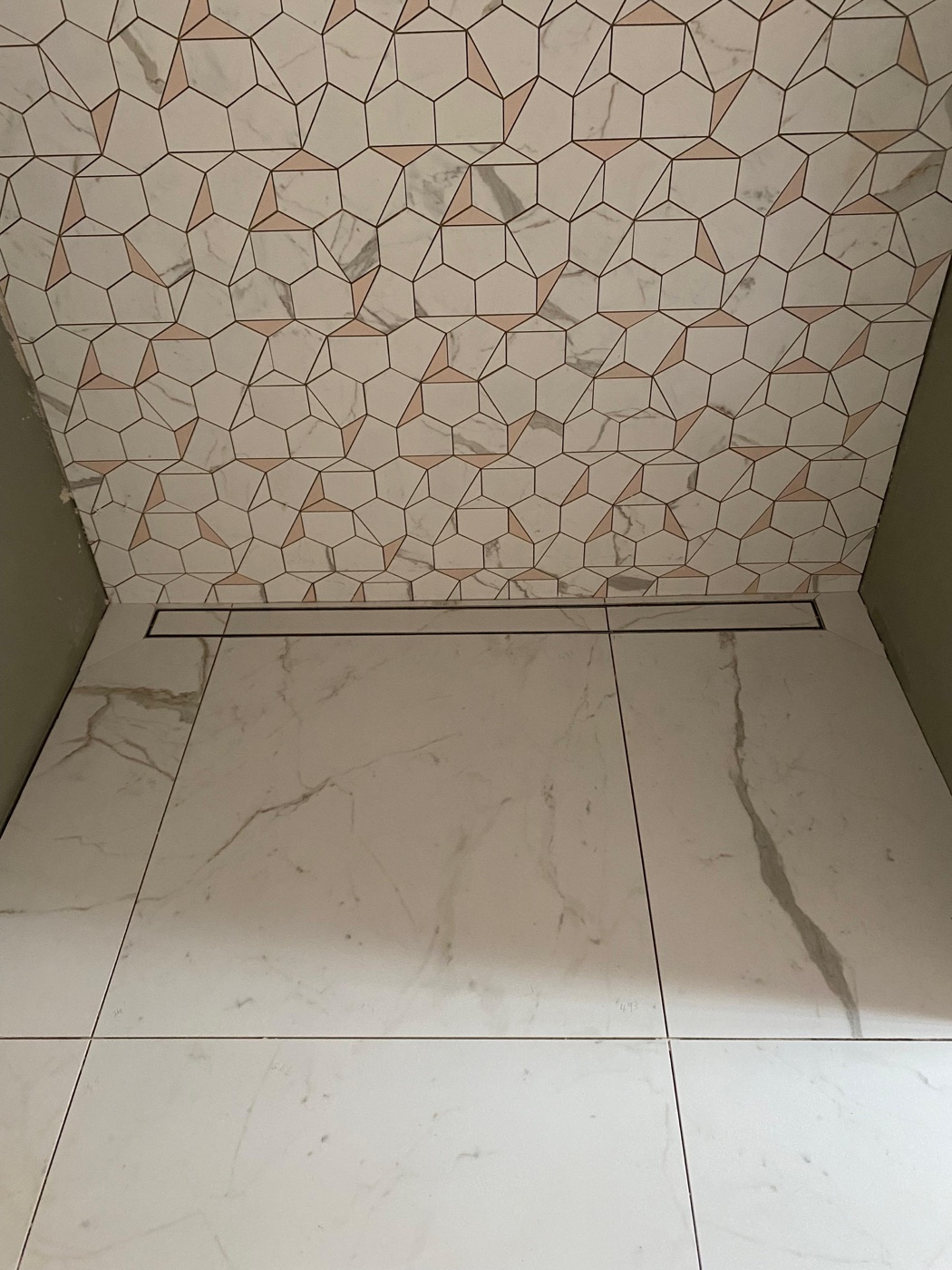 Calacatta gold hexagon mosaic bathroom, Bromley. Textured mosaic surfaces like this are one of the strongest directions in 2026. View the full gallery
The big shift: warm over cool
The dominant move in 2026 is away from cool greys and clinical whites and towards warmer, earthier tones. Greige porcelain is giving way to amber, caramel, terracotta, and stone. This is not a fleeting trend. It reflects how people are thinking about their homes more broadly: softer, warmer, less like a hotel.
In practical terms this means:
- Warm beige and sand porcelain floors replacing grey tile
- Terracotta-look tiles in both floor and wall formats
- Cream and buff limestone-effect large format tiles
- Brown-veined marble effects where white-on-grey was standard five years ago
Zellige: still strong but shifting colour
Zellige tiles have been the defining tile of the last few years. The handmade Moroccan clay tile with its irregular surface and glaze variation is not going anywhere in 2026, but the colour story is changing. Burgundy and deep red, which peaked last year, are giving way to amber, caramel, tobacco, and warm sage.
Zellige works because no two tiles are the same. The variation in glaze depth and surface texture creates a surface that looks alive under light. It reads differently morning, afternoon and evening.
What to know before you buy:
It is not flat. The irregular surface means grout lines are not uniform. Some people find this beautiful; others find it harder to clean than they expected. It suits period properties and characterful interiors well. It can look mismatched in a very contemporary fitted bathroom.
It is fragile. Zellige is softer than porcelain or ceramic. Floor applications are possible but I would use it on walls in a bathroom rather than on the floor where it will take foot traffic and dropped items.
Installation takes longer. The irregular thickness means each tile needs individual adjustment during laying. Budget more time and therefore more cost than for a standard wall tile.
Textured and 3D tile: the biggest growth area
 3D cube optical illusion floor in Beckenham — three-colour geometric tile creating depth and texture. Complex setting-out to centre the pattern perfectly. See more pattern work
If there is one clear direction in 2026 it is texture. Flat, smooth tiles are being replaced by surfaces that have physical depth: fluted tiles, ribbed tiles, curved surfaces, and relief patterns. The interest is in how tile responds to light across the day.
Fluted tiles are particularly strong right now. Vertical channels on a wall tile create a sculptural effect with minimal fuss. They work in a wide range of colours, suit both contemporary and period settings, and are relatively straightforward to install if the substrate is in good order.
3D geometric tiles, which I have been laying for years, are becoming more mainstream. The 3D cube illusion floor I laid in Beckenham is a good example: three colours of square tile creating an optical cube effect. Technically demanding to set out but the result is a floor that is genuinely interesting.
Tile drenching: one tile, every surface
Tile drenching is the term for running the same tile across the floor, walls, and sometimes the ceiling of a wet room or bathroom. Rather than mixing materials, you commit to one. The effect is immersive, almost architectural.
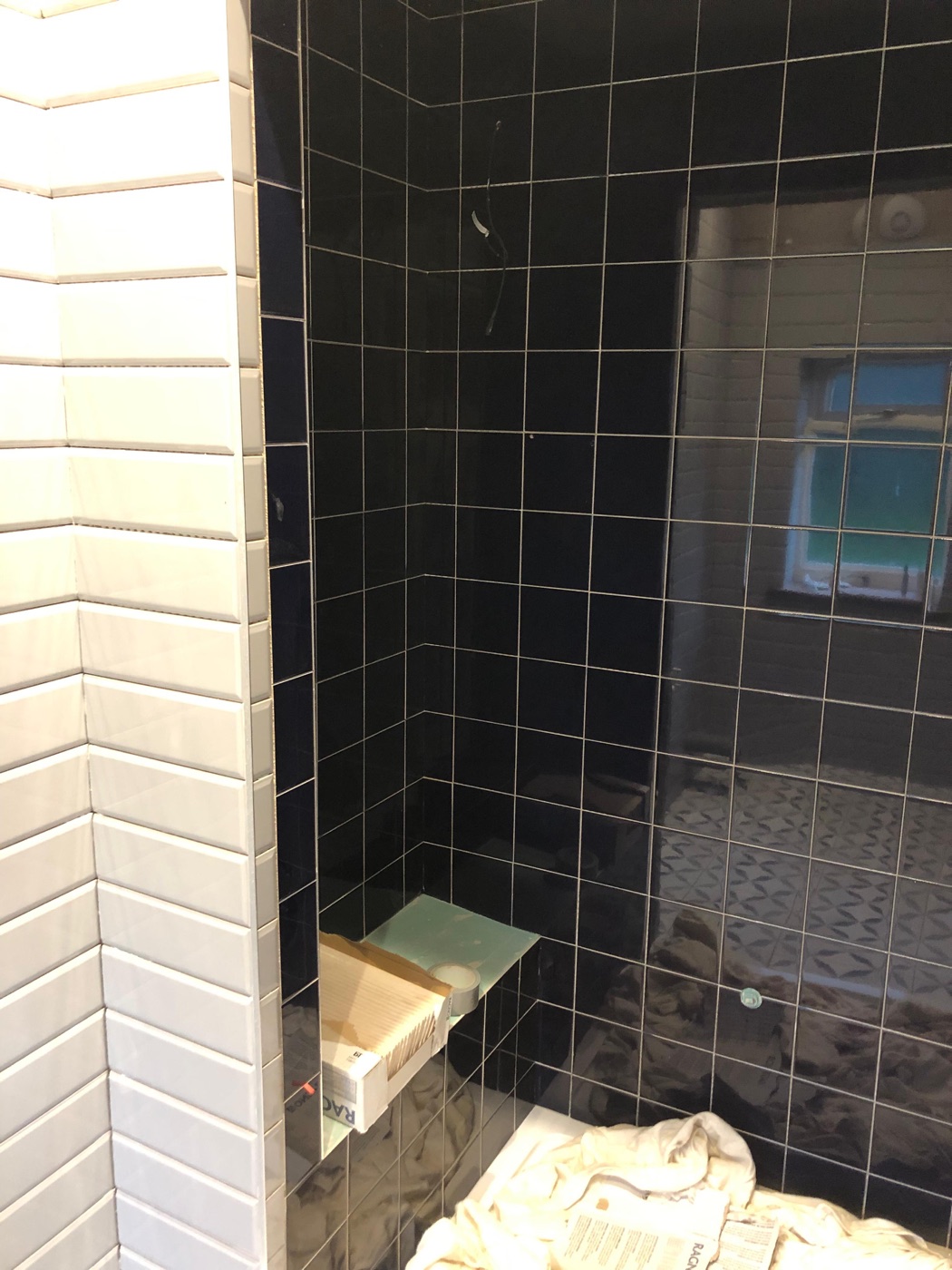
I have been doing this for years without having a name for it. The black marble wet room I tiled in West Wickham took the same tile from the floor up all four walls to the vaulted ceiling. It is one of the most dramatic rooms I have worked on.
The appeal is coherence. When everything is the same material, the eye reads the space as a whole rather than a collection of surfaces. It also makes the room feel larger, because there are no breaks.
Read more: Tile drenching explained in full
Matte finishes over gloss
Glossy tiles have been declining for years and that continues in 2026. The issues with gloss are practical: they show every fingerprint, every water mark, every smear. They require constant cleaning to look good. Matte and satin finishes age better in daily use.
Satin finishes, which have a low sheen without being fully matte, are particularly good in bathrooms because they are easier to clean than fully matte tiles while still reading as contemporary.
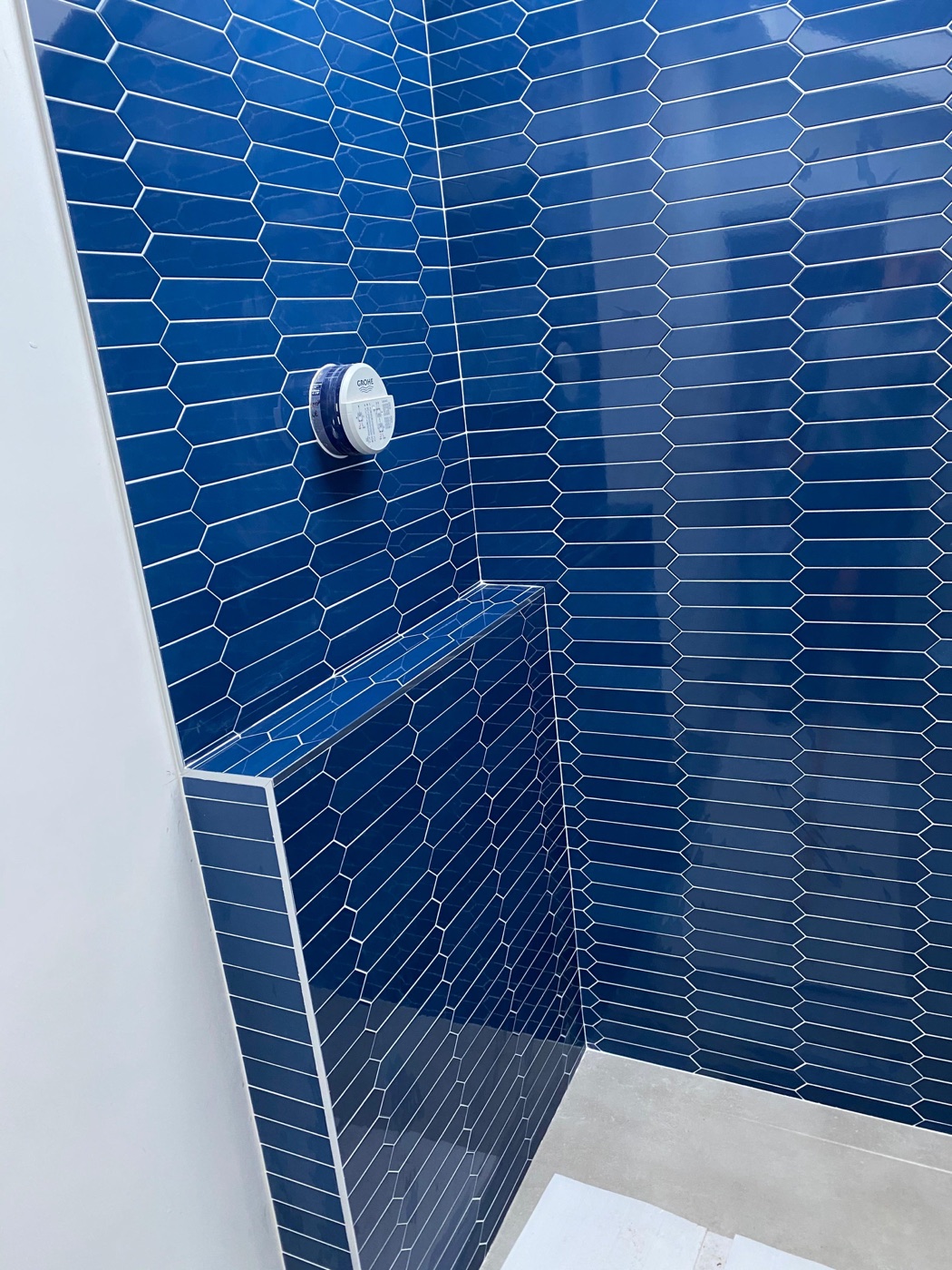 Navy hexagon mosaic with a full-height tiled bench, Beckenham. Mosaic in bold tones is a strong 2026 direction — far from the grey subway tiles that dominated a few years ago. View bathroom tiling service
What is going out
Cool grey: Still functional, still works, but it reads as dated now. If you are doing a bathroom and want it to feel current in five years, lean warm.
Subway tile on every wall: The standard white 75x150 subway tile is not wrong. It is just ubiquitous. If you want it, use it. If you want your bathroom to stand out, consider a different format.
Perfectly matching everything: Tone-on-tone and mixing materials within the same palette is more interesting than everything matching precisely.
Before you commit to a trend
The most important thing I tell customers is this: choose a tile you can live with in five years, not just in March 2026. Trends are useful for expanding your thinking but the bathroom you are tiling is not a magazine shoot. It is a room you will use every day.
The tiles that age best are the ones that are well-chosen for the room, properly installed, and not trying too hard to be current. A beautifully laid classic marble tile will still look right in 2036. An aggressively trend-driven tile may not.
For advice on what works in your specific room, get in touch for a free quote. I am happy to discuss tile choices before any work begins.
FAQ
What are the biggest bathroom tile trends for 2026? Warm earthy tones (amber, terracotta, caramel), zellige and handmade-look tiles, textured and fluted surfaces, tile drenching (one tile across every surface), and matte finishes. The overall direction is away from cool greys and towards warmth and texture.
Is zellige tile good for bathrooms? Yes, particularly for walls. Zellige works well in bathrooms for its handmade quality and light response, but it is softer than porcelain so I would avoid it on heavily trafficked floors. It suits period properties and warm, characterful interiors.
What colour bathroom tiles are in for 2026? Warm tones are dominant: amber, caramel, warm beige, terracotta, sage, and soft stone. Cool grey, while still practical, reads as dated in 2026. White subway tile is fine but common.
Are textured tiles hard to clean? Depends on the texture. Fluted tiles are no harder to clean than flat ones. Heavily textured or relief tiles with deep channels trap grout and product residue and need more attention. Ask before you buy.
Related reading: Tile drenching: the 2026 trend explained · Choosing tiles for a small bathroom · Marble in the bathroom: what to know · Bathroom tiling service across Bromley and South East London
Got a specific question? Call me on 07990 521717 , see the bathroom tiling service, or use the contact form — I'm happy to give advice with no obligation.